Trailing. Recovering Deer: Part 2
How to handle various difficult trailing situations you might encounter in the field when you're trying to recover a downed deer. Things to look for, tips and what to mark.
Mike Strandlund May 10, 2023



BIG SAVINGS
+EVERYTHING SHIPS FREE
Learn More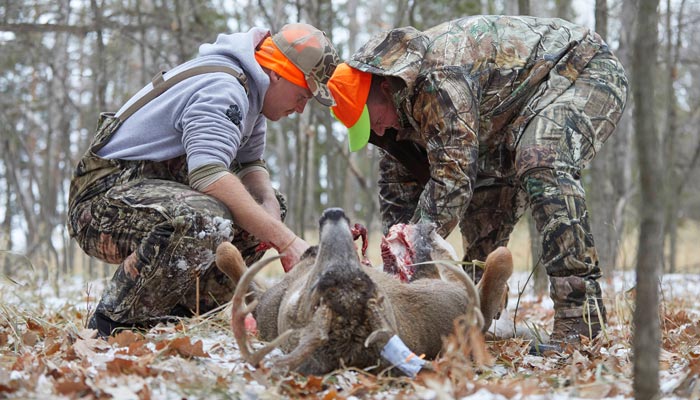
In Part 2 of this article, we will look at some difficult game trailing situations you may encounter.
You may find little or no blood at the point where the deer disappeared. Go to the spot where the deer was standing when you shot, and make a search. Look for blood, hair, chips of bone, and, if you were bowhunting, the arrow shaft.
Look for blood both on the ground and on vegetation about three feet off the ground behind the spot where the deer was standing. These may provide valuable clues to the location and lethality of the hit. Any shot that strikes a deer will cut hair and leave it at the point of the hit. If the hair is all the same length, and there is no blood, it usually means the shot was a grazing one - probably not lethal. If there is no blood, but there are longer hairs and shorter ones, the bullet or arrow probably penetrated, but not completely. In either case, keep looking for blood. Lighter brown hair comes from legs and midbody; longer, darker hair comes from the brisket and the back. Longer white hair comes from the belly or rump; shorter white hair may have come from the throat.
The appearance of the blood also indicates the location of a hit. Pink fluid full of tiny bubbles indicates a lung hit. Bright red blood comes from the heart, an artery, or capillaries in a muscle. Dark red blood comes from the liver or kidney, while watery blood mixed with food particles comes from the paunch.
For a bowhunter, the arrow shaft can reveal the most valuable clues. A shaft found on the spot of the hit, literally covered with pink or bright red blood, is the sign of a quickly fatal hit. There should be a very good blood trail. If the shaft is relatively clean, the hit was probably marginal. If it is covered with a greasy substance and has a strong odor, the hit was in the paunch. The type of blood and hair can give you some idea of the location of the hit, but don't read too much into this sign.
Hair length and color varies among deer. The blood may indicate where the bullet or arrow hit, but it may not indicate all that the projectile hit. For example, you may take a quartering-away shot, and find that the sign indicates a paunch hit. But the bullet may have also traveled into the lungs, where all the bleeding was internal.
When it's time to trail, go to the point closest to the animal where you found blood, and begin following the trail. When looking for blood, concentrate on the ground, but keep an eye on tree trunks, leaves, and grass above ground level where some blood may have wiped off. Blood may also be sprayed to the sides of a trail. Blood trailing is easy in snow. Even very tiny drops of blood stand out. If the blood trail stops, you can still follow the tracks. Tracks of the deer you're after may mix with those of other deer. If so, look for a distinguishing feature of the track, such as an ingrown hoof or a dragging leg.
If there is very little blood and the ground is bare, trailing is best done on hands and knees. Tracking here is a case of search and search; find a tiny pinpoint of blood, and search again. Mark each drop of blood with a piece of tissue or similar material before looking for the next drop. Be very careful not to obliterate any blood sign as you look. You may be better off waiting till nightfall and trailing with a lantern. Drops of blood catch the light at night and are much easier to see.
A blood trail that starts out with significant, red blood, but then peters out is often indicative of a nonfatal muscle wound. You should remain on the trail, however, in case there is internal bleeding. Continue following until you find where the deer bedded down. You'll find one of three things: The deer is dead; the deer lost much blood in its bed and should be followed; or the deer lost little blood in its bed and will survive.
It is easy to lose a faint blood trail. When you do, mark the last blood and search in half-circles in the direction the deer was going. Also keep your eyes peeled for scuffed leaves, broken or bent plants, and tracks.
Two or three hunters working together are often more effective at following a blood trail than one person, as long as they do it in an organized fashion, searching thoroughly before walking through it and possibly covering blood sign.
Sometimes one hunter can slowly follow the blood trail while another walks ahead, hoping to find blood closer to the game and save time. If you can't regain the blood trail, go back down the trail you've marked and search for blood on each side. A wounded animal will often double back on the path, then stagger off its course as it begins to lose consciousness.
Sometimes a deer will walk in circles and, on a forest floor with thick dead leaves, it may be difficult to tell, which way it was going. Certain signs may tell you: Drops of blood may splatter in the direction that a deer was going. If a whitetail was hit on the right side and there is no exit wound, blood will be present only on the right side of the trail in the direction the deer was going. If there is blood on both sides of the trail, but heavier on one side, the side with the heaviest blood sign is probably the side with the exit wound. Close examination of hoofprints in leaves or occasional bare spots also may show the way the deer was headed.
If there is no blood trail at all, but you're sure of a hit, there are other ways of recovering the animal. Go to the point where the deer vanished, take a compass reading on its flight line, and make a systematic search for at least 300 yards. Look for both blood and the deer itself. In thick cover, it may be difficult to see the deer even if you come quite close. You may be able to smell the deer if you can get within 15 yards or so downwind.
If you can't find the deer, stay at the scene or return after a few hours. Crows, magpies, ravens, and other scavenger birds may have the animal located, and tip you off with their calls. Vultures are silent, but may be easy to spot.
One of the best ways to find deer when there's no blood trail is with a tracking dog. Be sure it is legal in your state or county.
Here are some other tips on recovering wounded deer:
Trailing a wounded deer can take dedication and perseverance in the face of frustration, but the rewards are always worth the effort. There's a lot of satisfaction in successfully recovering a deer at the end of a difficult blood trail.
Always trail wounded deer quietly, in case they are alive, and you may be able to sneak close for a shot. Sometimes you may discover your deer down, but still alive. Get close enough for a sure shot, but not too close - cause as little distress as possible. Shoot does in the head and bucks in the top of the neck. Even if you don't want to save the antlers, they may need to be intact for you to register and legally possess the animal. If the deer appears dead, approach from behind - away from hooves and antlers - and check the eye. If the eye is closed, the deer is still alive and must be dispatched. If it is open, carefully lean forward and touch it with your gun barrel. If there is no response, you can be sure the deer is dead.
We're deer hunters, just like you. Trust Sportsman's Guide for all your deer hunting needs, including Tree Stands, Hunting Blinds, Hunting Boots and more.