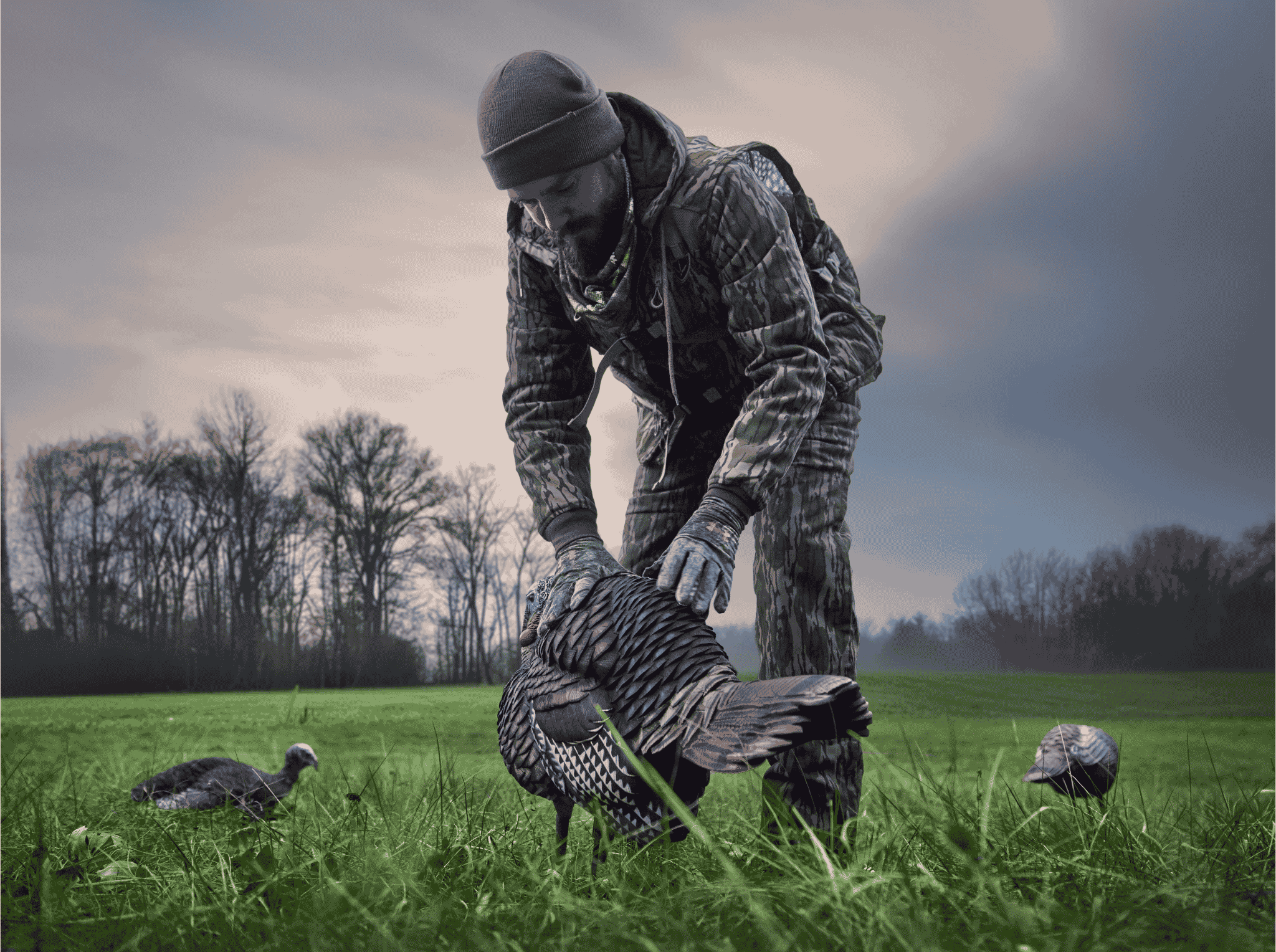
Turkey Hunting in the Rain Tips and Tricks
A wet-weather plan beats winging it. Build a simple before, during, and after-the-rain workflow and stick to it when activity is subdued.
Before rain arrives, identify the nearest open fields, logging roads, clear-cuts, and pasture benches to the roost. Pin safe entry routes on your map that avoid skylines and mud-slide hazards.
During light to moderate rain, slow down and glass first. Birds are there, just quieter. Call less, move with the wind at your back whenever possible, and let decoys pull birds the last 40 yards.
When the front passes and skies brighten, get aggressive. Birds often hit strut zones and feed edges fast. Be set up early on field corners, high-visibility ridges, or known travel lanes.
Scout field edges and logging roads in advance so you can slip in without crunching soaked brush. Start near the roost on wet mornings since birds often sit tight on the limb and pitch late. Set up 80 to 120 yards off the roost in the direction of the nearest open ground to intercept fly-down. We recommend using binoculars more than calls. Let your eyes do the locating and save vocal work for when you actually have a visual.
Call with diaphragms or weather-tolerant pots. Keep box and slate calls in a dry pocket until needed. Match volume to current conditions. In wind and steady rain, call a bit louder and less often. In calm drizzle, go softer and stay patient. Anchor a simple decoy spread in open ground. An upright hen plus a quarter-strut jake handles most rainy scenarios.
Build patience into the day. Wet turkeys move and feed, but they also pause longer. The hunter who tolerates drizzle, checks glass every few minutes and stays committed to the plan is more likely to punch a tag.
Blinds, Decoys and Setups for Wet Weather Success
Ground blinds are a turkey hunter's best friend when it rains all day. If the radar shows drizzle to steady showers for hours, pack a lightweight blind, chair and stakes. Set it up in advance (the day before if possible) or slip in well before light to avoid sky lining on open ground. Add turkey decoys made for field visibility to your setup.
In open fields and along logging roads, run an upright hen 12 to 15 yards in front and slightly off-center from your gun barrel, with a quarter-strut jake 2 to 3 yards behind her. In tight roads, a single feeding hen where birds naturally travel keeps things simple and realistic.
Wet days can shorten ethical ranges when visibility drops and birds look darker. Wait for a clear head-and-neck presentation inside your comfortable range. Keep shots inside the distances you pattern with your turkey load and choke, and inside your verified groups for crossbows.
Bowhunters should check serving and string condition after rain and keep arrows in a quiver that drains. Practice drawing inside a blind and confirm broadhead flight at rainy-day distances. Angle blinds so doors face away from birds and wind to minimize flap noise.
Rainy Day Turkey Hunting FAQs
- Do turkeys gobble in the rain?
Yes, but usually less. Expect fewer shock gobbles and more soft talk at close range. Activity often jumps after the rain breaks.
2.What do turkeys do after a storm?
They feed and move quickly into open areas to dry and strut. Be set on a field corner or logging road as skies brighten to take full advantage.
3.How do you protect calls and guns from moisture?
Run diaphragm calls, carry a weather-tolerant pot, and keep box and slate calls in waterproof cases. Wipe down your shotgun or crossbow at the truck, oil lightly at day's end, and cover optics during rain.
4.Is it good to turkey hunt in the rain?
Often yes. Fewer hunters, more predictable bird locations, and open-field visibility offer an advantage. Use patience, pick safe windows, and adapt calling techniques.
5.Where do turkeys go when it rains?
Open fields, logging roads, clear-cuts, and pasture edges where they can see predators and avoid soaked brush.
6.Which calls work best in the rain?
Diaphragm calls are most reliable. Some composite or glass pot calls also work. Keep box and slate calls dry in cases.
7.How should you set decoys in wet weather?
In open fields, place an upright hen 12 to 15 yards out with a quarter-strut jake a couple of yards behind her to pull reluctant toms.
Closing Thoughts: Make Every Rainy Day Count
With smart setups in open ground, moisture-ready calls, and breathable waterproof layers, turkey hunting in the rain can be one of the highest-odds plays of spring.
Balance ambition with safety. Respect thunderstorms and lightning, move carefully on slick terrain, and plan hunts around real-time weather. The payoff comes when the sky lightens and birds pour into view.



.png)