Don't Miss Your Calling
Avid outdoorsman Mike Roux details a few encounters with deer and the calls he used to bag them.
Mike Roux May 24, 2023



BIG SAVINGS
+EVERYTHING SHIPS FREE
Learn More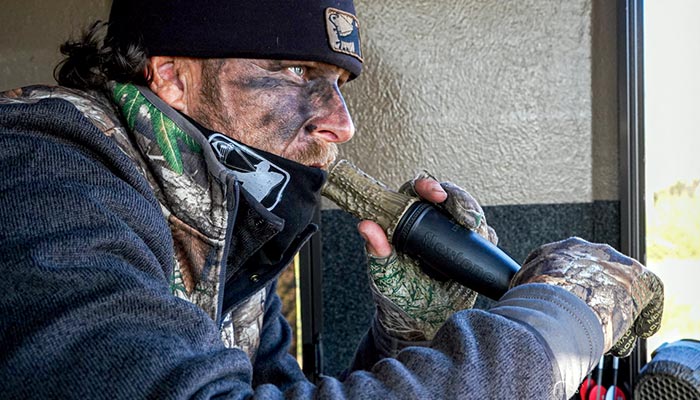
It was late December and I had not seen an antler since the peak rut in November. The weather had been awful and I had taken advantage of that fact by duck hunting instead of bowhunting. But I still had one Illinois archery deer tag to fill. I had taken a fat doe on Halloween day, so I wanted a buck now.
The day was pretty mild for December. It was sunny and would warm to nearly 40 degrees by the afternoon. There had been some deer movement early, but no bucks. Since the deer had slowed down, I left my stand and decided to stillhunt. Even with a bow, this is my favorite method for finding deer.
I moved several hundred yards from my stand site along the edge of a cornfield. There was on old logging road coming down the hill to the field. Many deer used the road, so I stopped for a while to watch. As I was focusing my attention on the road, a mature doe crossed the cornfield behind me. By the time I saw her, she was halfway across the field, about 100 yards out.
I reached for the lanyard around my neck. On this string are three deer calls. A grunt call, a snort call and a bleat call, all from Lohman Game Calls. All of these devices make different deer sounds and all are designed for different functions. I reached for my bleat call to get the doe's attention. My first call was a long, mellow bleat. The doe stopped dead in her tracks. She had heard the sound, but was confused about where it originated.
I had no intention of putting an arrow through this deer, but I did want to observe her reactions to my calls. As she stood there in the corn, her ears were like radar antennae. They pivoted on her head like they were on rotary wheels. She strained to hear the next sound. My second bleat was short, but filled with emotion. I have called-in many a female deer with this lost call.

Firearm deer hunters as well as bowhunters should take advantage of calling-in deer. (Photo by Grayling Akers)
The doe turned to me immediately, but then hesitated. She stood for a long time, studying the edge. She snorted once, but she was just checking. I did not call again. I had her full attention, and that is all I wanted. Her curiosity was a stronger tool than all my calls.
Deer bleat for a variety of reasons. The lost call that I just mentioned is one of the most common. I have seen and heard many young deer make this sound. A friend of mine had a fawn walk right up to him and bleat. She followed him for about 15 minutes, bleating with every step. The distress call of the whitetail deer also is a bleating sound. This call triggers the doe's maternal instincts, causing her to come and check on the calling fawn.
For whatever reason, this big doe responded well. She came to the sound, searching for its source. I was about 15 yards off the road, and I was camouflaged and motionless. She stepped onto the road and walked it all the way to the top of the hill. It would have been an easy shot, had I taken it. I felt good about the experience. Ten minutes later, I felt much better.
My surveillance was now being divided between the timber and the field. As is my luck, I was again watching the timber as a deer entered the field. A buck's grunt got my attention. I turned slowly to see a big bodied 8-pointer in the corn. He was tracking the doe. The secondary rut, I thought to myself.
His head was down and his nose was on her trail. As I watched his progress, I realized that he would probably follow her trail right up the road by me. I shifted my feet just slightly in preparation of a shot.
The buck was big, but I guessed him to be past his prime. His 4×4 rack was about ear width, but the tines were short and stubby. This was a buck that should be harvested. I wanted this buck. He stayed on the doe's trail until he reached the spot where she stopped and turned to come to my call. There too, did he stop. He watched and listened.
As the buck stood there, he did something I recognized immediately. Body language is extremely important deer behavior. Knowing these subtle characteristics can really help you predict how deer may respond to stimuli. This buck whirled on a dime and came to attention. I knew he had seen other deer entering the field. The other deer were out of my line of vision, but I was certain they were there. I knew I had to do something to get his interest back on the doe that came my direction. I reached for my calls once again.

The author saw the need and used calls to arrow this old 8-pointer. (Photo by Nancy Roux)
I took my grunt call. I was going to give him one short, crisp, low grunt. This was pretty much the sound he had made earlier. As I grunted, the buck spun around like a bull in the ring. He immediately began to paw the ground as he raised and lowered his head repeatedly. Whatever I said to him, he didn't appreciate. He started moving my way. His neck was bristled and he was walking stiff-legged.
As he reached the edge, he paused. He searched the timber with his eyes, ears and nose. I was positioned downwind of the road, behind a huge white oak. As he studied the terrain, he grunted again. I did not return his call. He was only about 40 yards away. I just waited patiently. I had not yet drawn my bow.
As he made his first step into the timber he lowered his head to smell the ground for her scent. He obviously found it and he walked directly up the old road. As his path put the big oak between himself and me, I slowly drew and anchored. At about 15 yards, he cleared the trunk. When he stepped out, he was broadside. I made a low PSSST sound and he stopped. A few hundredths of a second later my arrow pierced his hide, penetrated both his lungs and exited.
The buck sprang straight up, hunch-backed, and scrambled as he landed. He ran up the road about 50 yards and then slowed to a walk. He then stepped off the road, out of sight. He expired 19 steps from the road. It was as clean a bow harvest as I have ever had.
One of the main contributing factors to this clean harvest was the use of imitating deer vocalizations. Deer calling is one of the most dynamic ways to bring the animal into your shooting radius. There is a multitude of deer calls available. My best advice is to attend a seminar given by an expert in deer vocalizations, either a professional game caller or a biologist.
We're deer hunters, just like you. Trust Sportsman's Guide for all your deer hunting needs, including Tree Stands, Hunting Blinds, Hunting Boots and more.