Clancy's Dirty Dozen Deer Hunting Myths
Avid hunter Gary Clancy digs into the biggest myths in deer hunting.
March 06, 2023



BIG SAVINGS
+EVERYTHING SHIPS FREE
Learn More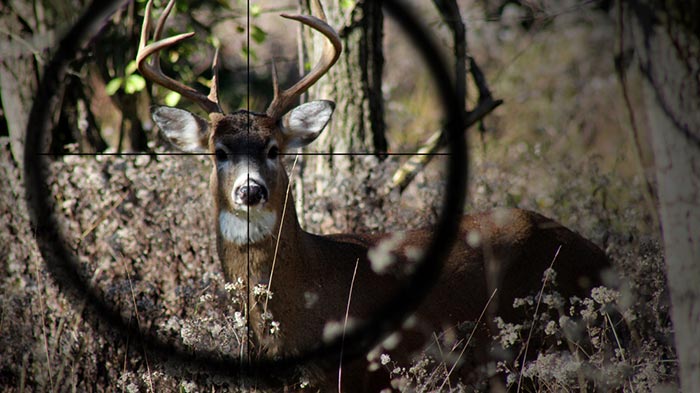
Hunting and fishing in general are riddled with myths. But in no other facet of hunting or fishing are myths, which are nothing more than misinformation handed down from one generation to the next, more prevalent than they are in the world of deer hunting. There is nowhere near the room in this article to cover all of the deer hunting myths, but let's take a stab at debunking some of the biggie's.

The author says sights on a shotgun are very important.
The .410 makes the best slug gun for deer because that little slug penetrates better than a big old chunk of lead out of a 12-gauge. This is a bad myth. The diminutive .410 is the very worst choice for slug hunting. Gratefully, this is one of those myths, which has waned some in recent years.
Speaking of slugs, there are any number of hunters who will tell you that them gosh-darned, new-fangled, saboted slugs ain't worth spit. It seems that many hunters paid good money for high-performance saboted slugs and then found out they could not hit the broadside of the proverbial barn with the new slugs. But it's not the fault of the ammunition. It's the gun. Saboted slugs are designed for use in slug guns with rifled barrels. The old-style Foster slug still shoots better out of most smoothbore barrels often much, much better.
Still on the subject of slugs, it continues to amaze me how many hunters still cling to the old myth that sights are unnecessary on a shotgun used for deer hunting. According to many slug hunters, a plain old bead on the end of the barrel is all you need at close range. The truth is it does not matter if the deer you shoot is at 25 yards or 125 yards, you have a better chance of putting that slug right on the money if you have sights on your slug gun. Open sights or a large peep are a big improvement over that brass bead, and a low power scope is better yet.
It just hit me that there are so many myths associated with just slug hunting that I could have done this whole article on that subject, but don't worry I won't, I'm moving on.
Instead let's take a look at myths surrounding the rut. One that just won't go away is the old notion that it takes a good cold snap for the rut to kick in. Sorry, it just ain't so. It looks that way sometimes, especially if we have had a warm spell at the start of the rut. Daytime buck activity will be minimal when the temperature gets above 50 degrees. It's a simple matter of the bucks being overdressed for such warm weather. All of the activity we hunters associate with the rut, such as rubbing, scraping, fighting, and breeding still takes place as scheduled, it just happens at night when it is cooler.
The actual breeding phase of the rut (and thus the other two phases as well) will occur within a few days of the same date each year. This is because of something biologists call photoperiodism. When the amount of daylight in a 24-hour period reaches a certain level it triggers something in the brains of bucks and does and the signal to begin what we call the rut is sent through the herd. The reason for the old cold snap myth is that very often when you get a cold snap on the heels of warm weather, buck movement during the day increases significantly. Old-time hunters just put one-and-one together and came up with the cold snap myth.
A well-traveled myth has it that only the older, larger, mature bucks get in on the actual breeding. The truth is if that were the case, there would be an awful lot of does not getting bred each November. There just are not that many big boys to go around. Studies have found that most mature bucks will breed five to eight does during the main rut. The rest of the does are bred by some very happy younger bucks.

The author says hoof prints in the middle of scrapes are sometimes put there accidentally.
Another old rut hunting myth has it that does come to scrapes, urinate in the scrape to let the buck know they have visited, and then wander off to wait for the buck to come check his scrape, take up her track and track her down. Well, it just does not work that way. Sure a buck and a doe may by happenstance occasionally get together near a scrape, but it's not planned few things in the whitetail world are. Most often a buck is attracted to an estrous doe by her scent. He follows the scent, sometimes in her track, more often airborne scent, right to the doe. Bucks and does are going to get together, scrape or no scrape.
But it is true that you can tell the size of the buck, which made the scrape by the size of his signature hoof print in the center of the scrape, right? Sorry, but while larger bucks often have larger hooves than small bucks do, just as in humans and foot size, such is not always the case. And that hoof print so often found in the center of a scrape was not really put there on purpose. Chances are the buck just walked through the scrape after he was done pawing and peeing in it.
Grunt calls and doe bleats only work during the bow season. This is not true. A bunch of bucks will be grunted up and shot this season by gun hunters who have gotten over this myth.
The full moon is the worst time to be hunting. There is some truth to this one at other times of the season, but when the rut is on, you can take this one and pile it on the myth heap.
Those fancy, new (OK, so they first came out back in 1985) in-line muzzleloaders are more accurate than the old Hawkens. This is not so in-line, cap-lock or flint-lock, it's the barrel that makes the difference, not the mechanism that makes it go bang.
Deer scent is a big waste of money. Not in my book it's not, although I do agree that $10- to $20 a bottle is a little much. The biggest buck I have personally ever shot followed a drag line scent trail I had laid down six hours earlier. If I had not bothered to lay down that scent trail that morning, odds are good I would have never seen that buck, much less put him down. The truth is scents do not work most of the time. But they work often enough that you won't find me in the woods without them.
Binoculars are just extra baggage. Who needs them? Well I do for one. I've been carrying and using binoculars while deer hunting for the past 30 years. I've lost count of the number of deer, which I did not see with the naked eye, but have seen with binoculars. Binocs are not just for distance work, or at least they are not the way I use them. Most of the time I use binoculars to slowly scan and pick apart the cover. It amazes me how often I see an ear twitch, an eye blink or the swish of a tail. The horizontal plane of a deer's back in a world of vertical trees is another dead giveaway. Even on days when I never spot a deer with my well traveled 7×35 Leica's, I enjoy using them to study birds and small critters up close and personal. Get in the habit of using binoculars and like me, you will be amazed at what you have been missing.
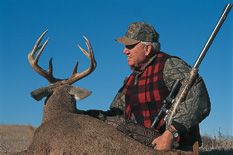
In-line muzzleloaders are not more accurate than cap-lock or flint-lock models.
There you have them, my dirty dozen deer hunting myths. Try not to let any of them get in your way this season.
Visit Sportsman's Guide for a great selection of Big Game Hunting Gear.