Best Whitetail Deer Hunting Gear for Every Season
Build a seasonal whitetail deer hunting kit with Sportsman's Guide. Shop the best early, rut & late-season whitetail hunting clothing, optics, boots & more.
May 05, 2026



BIG SAVINGS
+EVERYTHING SHIPS FREE
Learn More.png "Best Whitetail Deer Hunting Gear for Every Season")
A season-by-season whitetail gear roadmap from Sportsman¿s Guide that helps you build one flexible system of clothing, boots, tree stands, optics and accessories that you can adjust for early season heat, mid-season swings, the high-energy rut and brutal late-season cold.
Whitetail seasons are never static. Early hunts can be hot, humid and buggy with thick cover, while late season brings bare trees, biting wind and long, cold sits over food sources.. Deer change, too shifting from summer feeding patterns to pre-rut jitters, full-blown rut chaos and finally the late-season grind. Your gear needs to change with them if you want to stay comfortable, quiet and effective.
From early-season warmth to late-season cold, this guide covers what you need for every phase of the hunt. Start simple, then add and adjust as conditions and deer movement shift. We'll help you find the right clothing, boots, optics, and gear to stay ready for the entire season.
There's a lot to keep in mind when it comes to hunting gear, but here are the most important takeaways for building a season-proof kit:
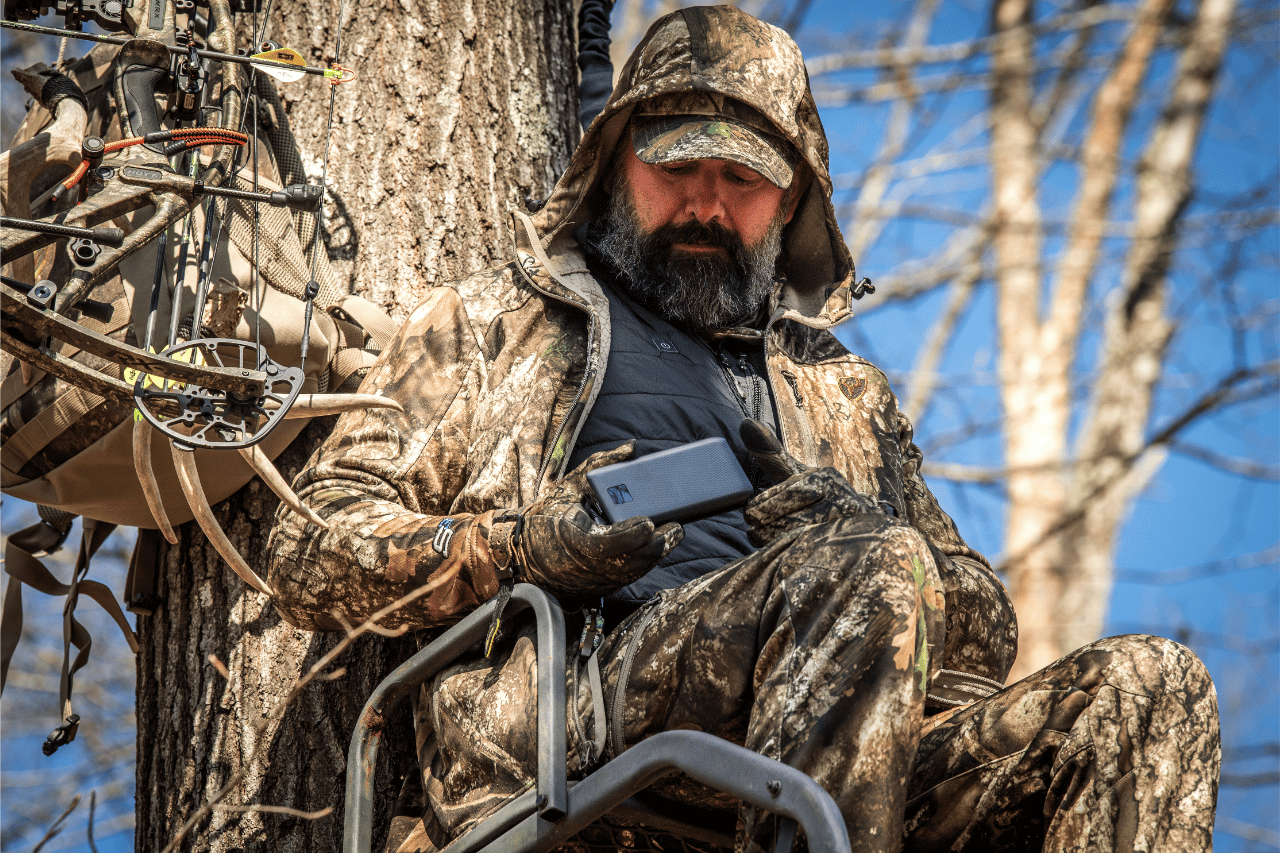
Think in systems, not one-off items. A reliable weapon, a smart layering plan, boots matched to temps, dependable optics, and a do-it-all pack form the backbone of a whitetail kit that works from opening day to the last tag punch.
Early season can be hot, green and buggy. Deer tend to pattern around evening food: crops, green plots, water, and shorter sits beat all-day marathons. Your gear should keep you cool and quiet while you slip in and out without blowing up a spot.
Clothing: Go light and breathable. Moisture-wicking polyester or merino-blend bases pull sweat off your skin. Choose airy camo shirts and pants with venting or mesh panels. Water-resistant finishes help shed a surprise sprinkle or dew on a slow stalk. Always remember that quiet fabric makes a big difference when you're close.
Boots: Early hunts mean wet grass and creek crossings. Pick uninsulated or lightly insulated waterproof boots with real ankle support for hanging stands or walking fence lines. Pair them with breathable socks and consider ankle gaiters to keep seeds and grit from getting into your boots.
Optics & accessories: Compact binoculars allow you to see field edges from a distance. A mapping app helps plan quiet entries with the wind right. Don't forget insect protection (repellents and Thermacell units), scent-control spray for confidence, a lightweight daypack, and a dependable headlamp with a red mode for stealthy hikes.
Clothing
Base layers
Boots
Optics
Insect & scent control
Pack & lighting
As temps cool and the wind picks up, deer movement often extends into late morning and even mid-day. Conditions can change quickly, stabilize around the noon hour, and get chilly towards the end of the day, so your kit needs to be versatile allowing you to adapt without having to trek back to the truck.
Here's a simple rule to help you keep up with the changing (and sometimes unexpected!) conditions: keep your early-season base that you started with, add a warmer mid-layer (fleece or grid-knit wool) and top it with a quiet, wind-resistant jacket and pants. That wind-blocking layer will make all the difference on a breezy day out in the woods.
Feet follow suit: upgrade to mid-insulation boots (around 400800 grams, depending on your cold tolerance and activity) with quality wool or synthetic socks. Bring slightly heavier gloves, a beanie and a neck gaiter, but keep your trigger hand dexterous with thin liners or a muff.
Think flexibility: keep extra layers in a pack so you can add or shed on the move. Keep a compact seat cushion and hand warmers in your pack, too for longer ambushes without bulk. As sits get longer, comfort accessories become more important. A compact and durable option like the Badlands ATX 12 Hunting Pack helps you carry layers and essentials without adding bulk.
1.Start with your early-season base layer to move sweat away from skin.
2.Add a mid-weight insulating layer of a quiet fleece hoodie or grid-knit wool.
3.Top with a wind-resistant, water-shedding jacket and pants that stay quiet.
4.Upgrade boots to 400800g insulation with supportive soles; pair with quality wool socks.
5.Carry slightly heavier gloves, beanie and a neck gaiter.
During the chase phase, bucks cruise for does during daylight hours more than any other time of year, with peak activity at dawn and dusk. You'll likely sit long and need to react fast when a deer appears. Comfort and organization count, but so does staying tethered and safe.
Wear quiet, warm outerwear you can trust for dawn-to-dark sits. If you're in a treestand or saddle, clip into a full-body safety harness and run a lifeline. A dependable option is the Hunter Safety System Shadow Safety Harness. A windproof jacket and bibs paired with a warm mid-layer keep you still and silent when the action pauses.
During this time, calls, rattling and scent lures shine. A soft-to-medium grunt tube and a bleat can help pull curious bucks. Calls and scents become especially effective during this phase. A classic choice is the Primos Buck Roar II Deer Call. Rattling antlers or a bag can work near bedding edges and travel corridors.
Keep your optics close. Binoculars confirm your target while a rangefinder zeroes in distances. Keep bow or rifle hangers, tethers and pockets organized so you can grab, draw, click off a safety, and shoot without drawing attention to yourself.
Safety reminder: Always wear a full-body safety harness when you leave the ground, maintain three points of contact climbing, and use a lineman's belt or lifeline from the moment you step onto the ladder until you're back on the ground.
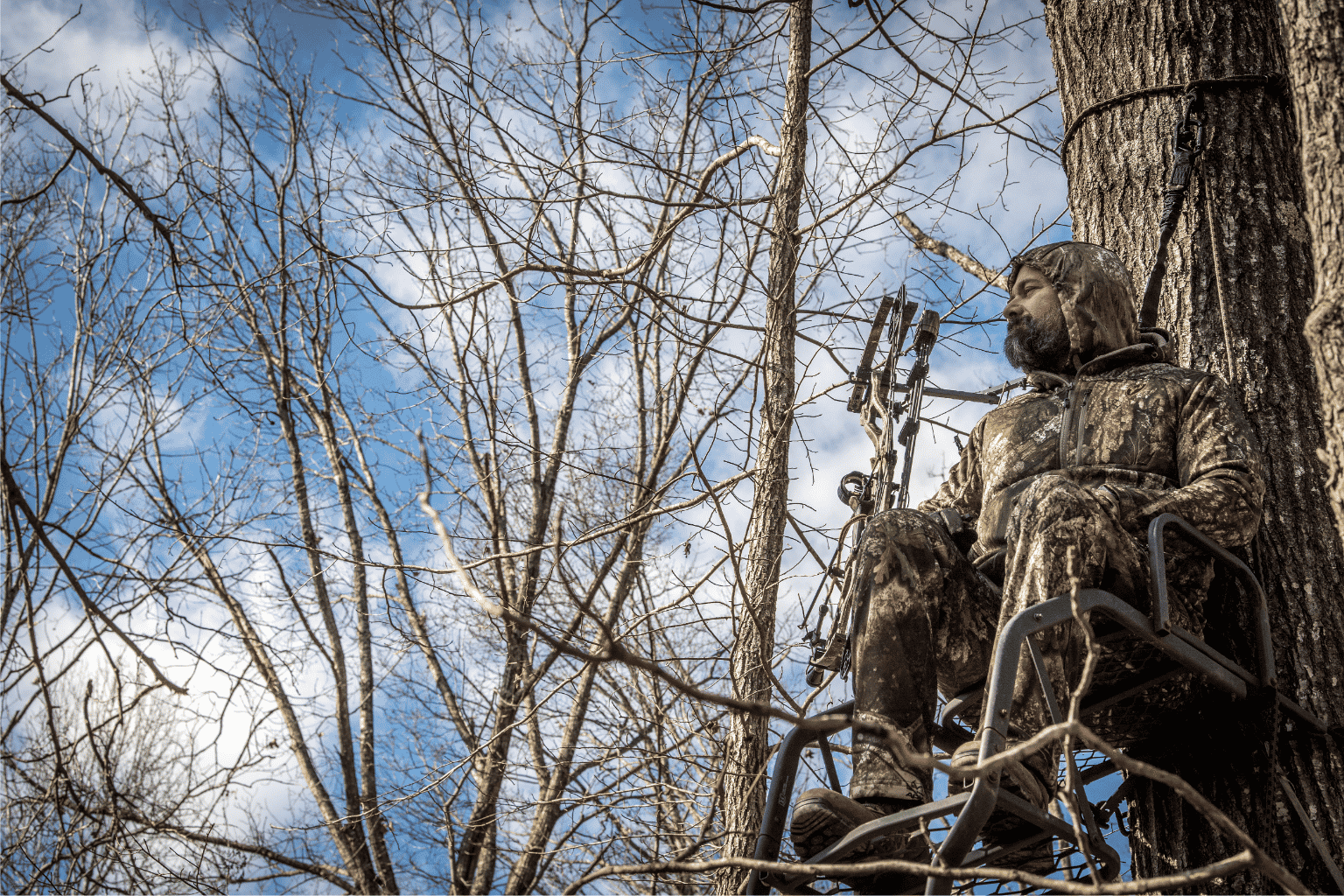
Late season means bare trees, biting wind, and deer focused on food. The hunters who are successful are the ones who outlast the cold. Comfort is your secret weapon hereif you can stay warm and still, you'll keep yourself in the game when that last-light buck steps out.
Build a true cold-weather system that includes heavyweight base layers, thick insulating mid-layers, windproof and waterproof bibs, and a parka designed to stay quiet in freezing temps. Look for robust hoods, high collars and hand-warmer pockets in purpose-built whitetail pieces from brands like Scentlok and Badlands at Sportsman's Guide.
The wrong footwear can end a hunt sooner than planned. During the colder months, choose high-insulation boots (1,000 grams and up, or dedicated late-season pac boots) with premium merino or wool socks. Boot blankets in the stand add another layer of heat retention without adding weight on the walk in. Boots should be heavily insulated for long sits. A strong late season option is the LaCrosse Men's Alphaburly Pro 1600G Boots.
Round it out with a hand muff, chemical warmers, an insulated seat cushion and even a compact heater for blinds (where legal and safe). Optics with excellent low-light performance help you pick deer out on snowy fields or shaded cutovers. A monopod or rest can steady shots in bulky layers.
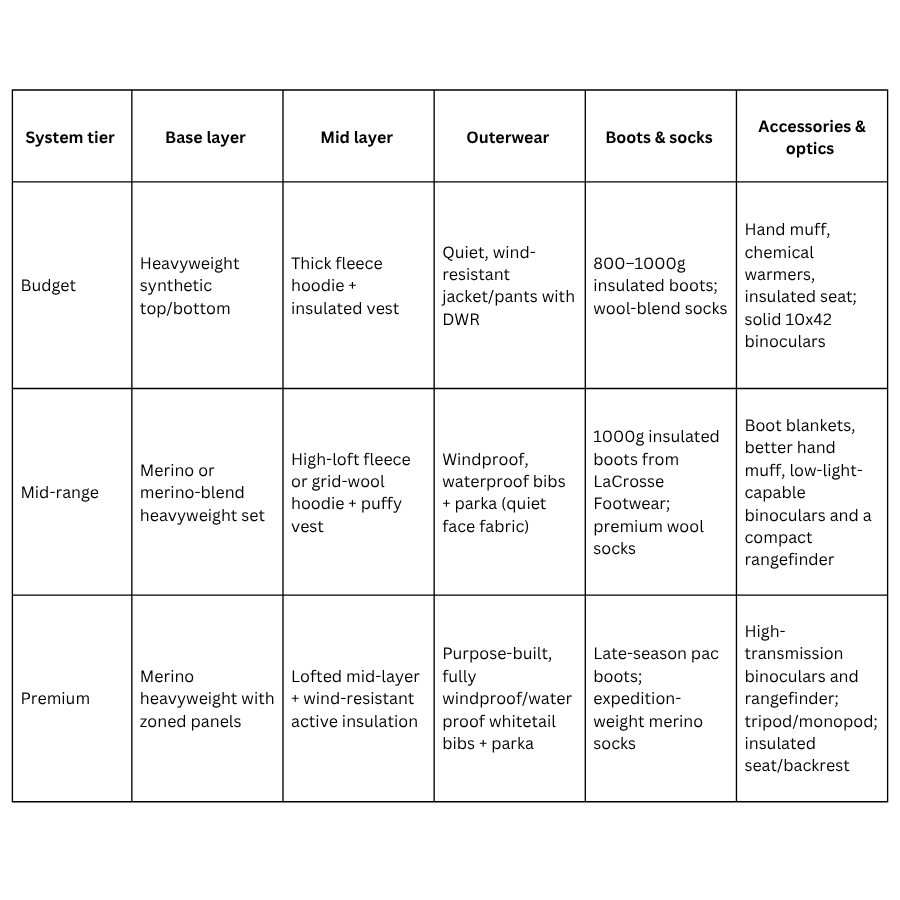
Here's how to shop according to your budget:
The best hunts come down to being prepared with the small details. Good optics, a comfortable pack, sharp knives ,and reliable lights turn long sits and tough tracks into a successful hunt. If you build a solid accessory list once, you can carry and depend on it all season.
Round out your setup with core items from the hunting accessories collection.
Think in categories so you don't overpack: optics on your chest, essentials in a quiet daypack, safety and repair items in a dedicated pouch, and field-dressing tools ready to deploy at any moment.
Sportsman's Guide stocks trusted names in optics like Vortex Optics and Leupold, along with hunting packs, knives, lights, first-aid and navigation gear so you can check every box without chasing niche gadgets.
Binoculars (8x3210x42) with a harness and a compact rangefinder, plus a phone with mapping apps backed up by a compass and printed map.
A comfortable daypack with smart storage like dry bags, zip pouches, tag/permit holder, and space for extra ammo or arrows.
Headlamp with spare batteries, a small flashlight, and reflective trail markers to guide your way in and out.
Pocket first-aid kit, firestarter (lighter + tinder), and a compact repair kit with duct tape, zip ties, and a multi-tool.
A sharp field-dressing knife (replaceable blade or fixed), nitrile gloves, a compact bone saw, and game bagsplus a drag rope, sled, or cart for getting your deer out.
Wind-checker powder and scent-control sprays or wipes to stay undetected.
Your kit should match your approach. If you're hunting on the move (usually on public land), you're covering ground or adjusting setups so you'll want lightweight, quiet layers and a dialed, efficient pack. If you're settled into a stand or blind on private land, you can prioritize warmth and comfort with more insulated outerwear and boots built to handle long hours without movement.
Terrain matters, too. Big timber rewards quiet camo patterns and grippy, supportive boots for uneven ground. Ag fields call for low-light-friendly optics and windproof outerwear to beat open-country gusts. Mixed cover favors do-it-all pieces and mid-size packs that carry layers without getting in the way.
Treat pack size and weight as trade-offs: longer hikes mean lighter loads while short walks to a blind accommodate a larger pack with extra insulation and comfort add-ons. Test and refine after each season and swap one weak link at a time. Sportsman's Guide has options across styles, so you can start where you are and adapt over time.
Invest your dollars in gear that pays off longterm. Examples include durable boots that fit and stay dry, optics you can trust for a clear view no matter the time of day, and safety gear that keeps you clipped in. Those are buy-once, cry-once categories that carry across seasons.
Value and mid-tier options shine for base layers, gloves, hats and even some outerwear. House-brand insulated bibs, mid-range 10x42 binoculars and proven scent-control products stretch dollars without sacrificing performance. Build your complete kit one season at a time instead of all at once. Start with essentials, then upgrade the weakest link after each year.
Keep a short wish list and pounce when prices drop. Take quick notes after every hunt so upgrades are purposeful, not impulse buys.
Make packing repeatable. Keep labeled totes or bags for early, mid, rut and late-season layers and accessories. When the forecast shifts, grab the appropriate tote, add in your weapon, optics and pack, and you're halfway to the truck already.
Run a quick pre-hunt routine: check weather and wind, adjust your layers, confirm batteries in your headlamp, rangefinder and GPS/phone, and verify ammo or arrows plus tags and licenses. A minute with your wind-checker and entry plan saves blown hunts.
Inspect safety gear before each phase: treestands, sticks, ropes and your full-body harness. After every sit, jot down a few notes of what worked, what didn't and what to upgrade from Sportsman's Guide next time. Use this guide as a seasonal checklist, keep refining, and step into the woods confident and ready.
Prioritize cooling and stealth: lightweight, breathable moisture-wicking camo layers; uninsulated or lightly insulated waterproof boots with real ankle support; compact binoculars; insect protection like repellents or Thermacell; a scent-control spray; a light daypack; and a reliable red-mode headlamp. These pieces let you slip close to food-focused deer without overheating.
Choose quiet, warm outerwear suited for all-day sits and always wear a full-body safety harness with a lifeline. Carry a grunt tube, a bleat can and rattling antlers or a bag; add estrus or curiosity scents used sparingly and only with the right wind. Keep binoculars and a rangefinder handy, and organize your stand with hangers, tethers and accessible pockets so you can react quickly.
Layer heavyweight bases and thick insulating mid-layers under fully windproof, waterproof bibs and a parka. Pair with high-insulation boots (1,000g or pac boots) and premium wool socks, and consider boot blankets in the stand. Add a hand muff, chemical warmers and an insulated seat cushion. Optics with strong low-light performance help you spot deer at last light on open fields or cutovers.