Best Camping Tech Gear & Gadgets That Earn Space In Your Pack
Discover the best camping tech gear, cool gadgets for camping & high tech comforts to upgrade your next camp or hunt. Learn more & shop now at Sportsman's Guide.
June 22, 2026



BIG SAVINGS
+EVERYTHING SHIPS FREE
Learn More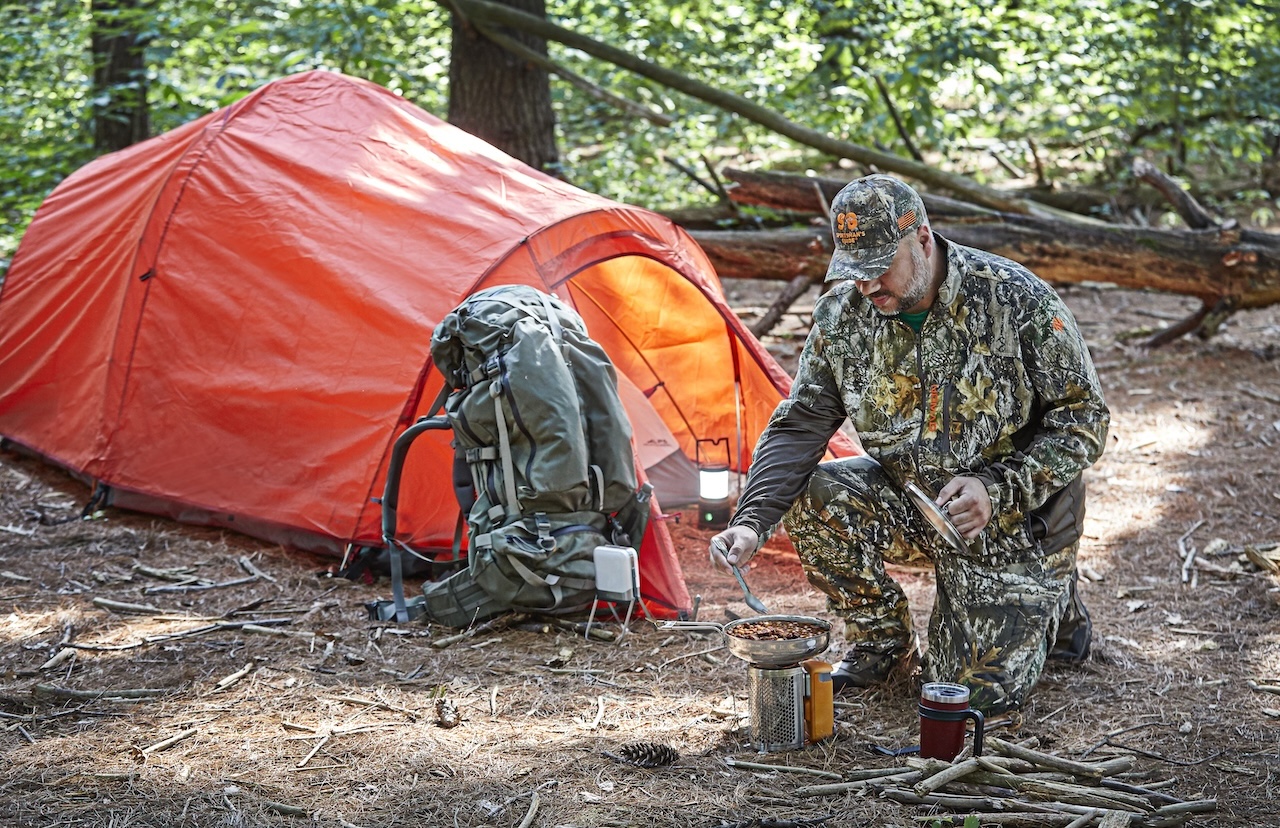
Not everything that calls itself camping gear is worth hauling into the field or into the woods. But the right camping tech gear that solves real problems changes how you experience time in the woods. A reliable headlamp keeps you moving after dark. A satellite communicator can save your life. A smokeless fire pit turns a cold evening into something you actually want to sit around. That's what this guide is about: high tech camping gear that earns its weight.
Whether you're rolling into a state forest campsite with a truck full of gear or packing into the backcountry for a late-season elk hunt, the categories stay the same. Power, lighting, navigation, cooking, and comfort. The gadgets that cover those five areas are the ones you reach for every trip. Everything in this guide is available at Sportsman's Guide, and the focus throughout is on products that hold up in real conditions, not stuff that looks good in an unboxing video.
If you're already stocking up on hunting gear for deer season, layer in a few of these tech upgrades and you'll head to camp better prepared than most hunters in the field.
Before diving into specific products, it helps to understand the five categories that matter most when building out your kit. Each one has options for the weekend truck camper, the backcountry backpacker, and everyone in between.
Lighting is non-negotiable. One rechargeable headlamp per person and a couple of area lanterns covers most camps. The BioLite AlpenGlow 500-Lumen Multicolor Lantern is a standout here, and the BioLite 425 Rechargeable Headlamp handles personal illumination without the dead-battery surprises of disposable AA models.
Power keeps everything else running. A compact power bank handles phones and headlamps on short trips. For basecamp or car camping with heavier loads, a portable power station like the Goal Zero Sherpa 100 carries enough capacity to run lights, charge optics batteries, and keep GPS units topped off.
Navigation and safety cover satellite communicators, GPS watches, and the redundancy tools that matter when you're beyond cell range. Garmin's inReach lineup and the Fenix 8 Smart Watch belong in this category.
Cooking and fire includes gear like the BioLite CampStove 2+, which burns twigs and generates electricity at the same time, and the Solo Stove Mesa XL Tabletop Stove for a smokeless fire you can actually sit close to.
Comfort rounds things out with rechargeable bug control, quality camp chairs, and simple gadgets that help you sleep better and recover faster between days in the field.
Browse the full camping department at Sportsman's Guide to see budget-friendly and premium options across every one of these categories.
Dependable power is the backbone of any modern camp setup. Anyone running trail cameras, GPS units, and rangefinders know this well. When your optics battery dies at 4 a.m., you want a solution sitting on the tailgate, not a scramble through your pack.
The decision between a power bank and a portable power station comes down to trip length and load. A 10,000-20,000 mAh power bank handles a weekend trip for one person: two or three full phone charges, a headlamp recharge, and maybe a camera top-off. That's plenty for a backpack hunt or a two-night campout where weight matters.
For car camping, basecamps, or any trip with multiple people and multiple devices, step up to a portable power station. TheBioLite Charge 100 Max Portable Charger 25,000mAh portable charger power bank that can handle laptops, tablets, phones, earbuds, smartwatches and more. With a magnetic wireless deck, high-speed 100W USB-C, and USB-A ports, Charge 100 Max features more ways to charge than comparable power banks, making it your best choice for multi-device charging. FAA compliant capacity and compact design is perfect for travel.
Solar panels can supplement both options, but go in with realistic expectations. A 60-watt foldable panel in direct sun takes about five to six hours to meaningfully charge a mid-size power station. Cloud cover, tree canopy, and shorter fall days cut that significantly. Treat solar as a supplement, not a primary source, unless you're in the desert Southwest in July.
Quick Comparison: Power Options for Camp

Browse power banks in camping accessories, portable power stations, and batteries at Sportsman's Guide.
A complete camp lighting kit isn't complicated, but most people underpack it. The standard that works: one rechargeable headlamp per person, one area lantern for the main camp space, and one smaller lantern or string light for the tent. That's three light sources for a solo camper, five or six for a family. Get them all rechargeable and you've eliminated the midnight dead-battery crisis entirely.
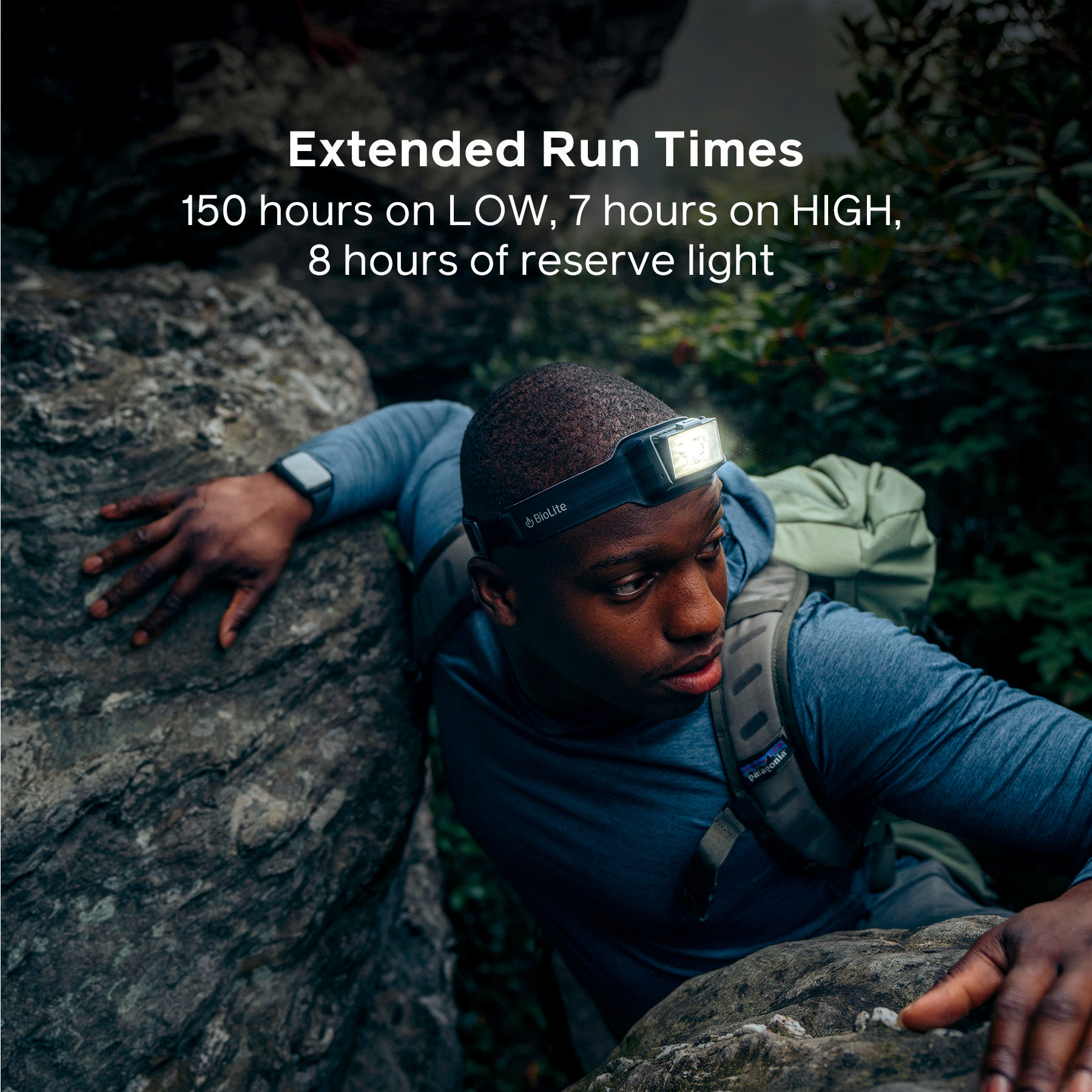
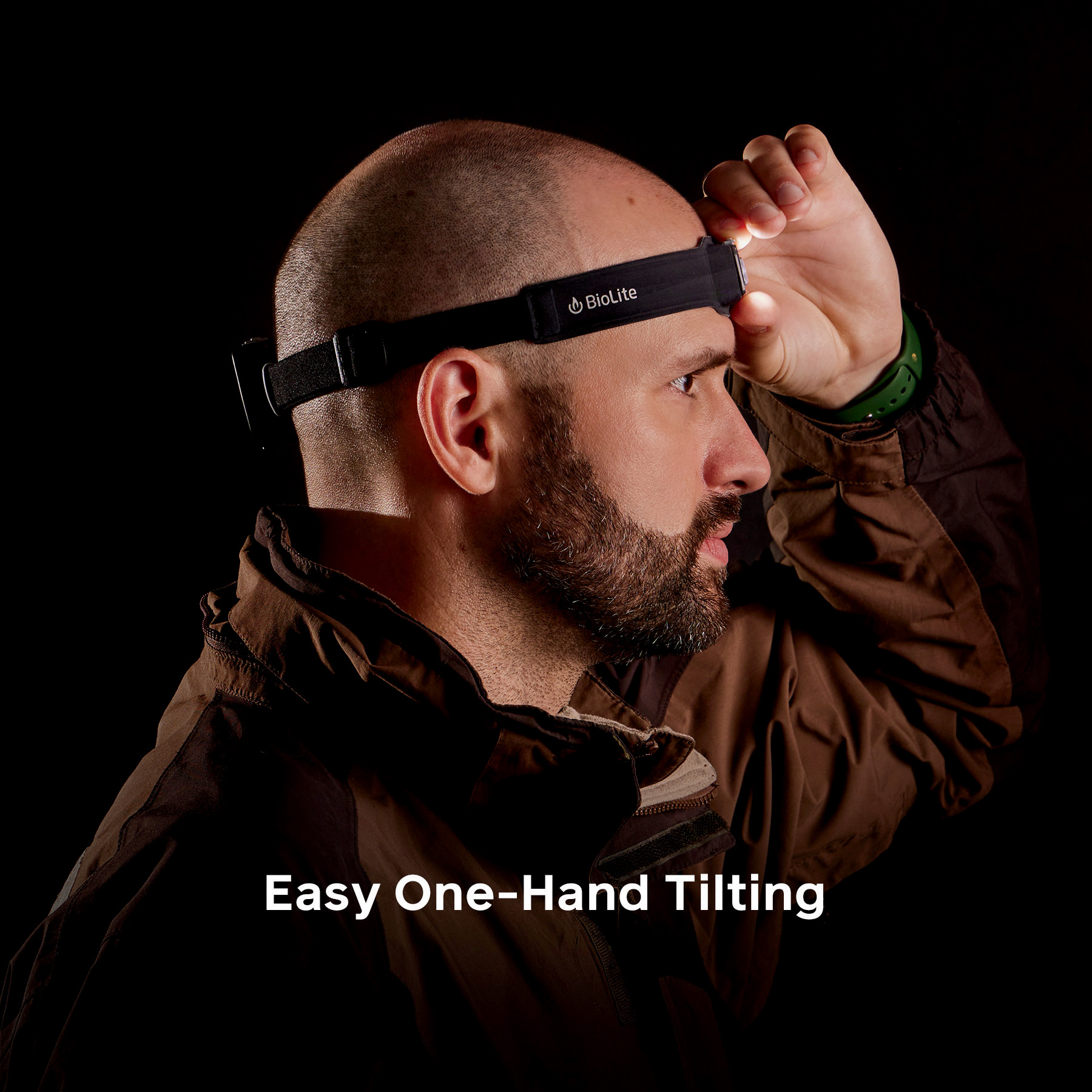
For headlamps, brightness and battery life matter most. The BioLite 800 Pro Rechargeable Headlamp puts out 800 lumens at full power with seven hours of runtime at that setting and up to 150 hours on the lowest mode. Its 3D SlimFit design keeps the weight balanced on your head, so it doesn't bounce when you're field dressing a deer at midnight or hauling firewood before dawn. Look for headlamps with a red-light mode to protect your night vision when moving around camp after dark.
The BioLite AlpenGlow 500-Lumen Multicolor Lantern is the best all-around camp lantern in SG's inventory. It has a warm white mode for cooking and eating, a red mode for preserving night vision, and a multicolor mode that kids and hunting buddies both tend to appreciate. Shake it to unlock additional modes. At 4.8 stars across 169 reviews, it's earned those ratings in the field.
If you need a smaller, lighter option for the tent or as a backup, the BioLite AlpenGlow Mini 150-Lumen Lantern does the job. Same rechargeable USB design, 40 hours of runtime on low, and it fits in a jacket pocket.
For tent lighting, look for string lights or compact lanterns you can hang from a gear loop. Keep at least one lantern in the tent door area so getting up at 2 a.m. doesn't require fumbling for a headlamp first.
Browse headlamps and lanterns or search rechargeable lanterns directly.
Smartphone GPS apps are useful tools, but they're also dependent on battery life, signal, and downloaded maps. For serious backcountry camping and hunting, you want dedicated devices that work independently of your phone and don't die after a few hours of active use.
The distinction between GPS devices matters. A handheld GPS unit or GPS watch handles navigation. A satellite communicator handles emergency contact and two-way communication. Both use satellite networks, but they serve different purposes. The Garmin Fenix 8 Smart Watch AMOLED is a GPS watch that does serious navigation work with preloaded topographic maps, multi-GNSS reception, and a bright AMOLED display readable in direct sunlight. It's the wrist-based navigation tool for hunters who want their route, elevation, and waypoints without carrying an extra device.
For communication, that's where the Garmin inReach lineup earns its keep. The Garmin inReach Messenger Plus is the top-tier option that sends and receives two-way text messages, photos, and voice messages via the Iridium satellite network, anywhere on the globe, with no cell signal required. Trigger an interactive SOS that connects you directly to Garmin's 24/7 emergency response coordination center, and response coordinators can see your photos to better assess the situation.
If you want a lower-cost entry point, the Garmin inReach Messenger Plus gives you global two-way texting and SOS capability in a lighter package with fewer multimedia features. For the solo backpacker who wants the smallest possible device, the Garmin inReach Mini 2 weighs 3.5 ounces and clips to a pack strap with over 1,200 five-star reviews backing it.
"A satellite communicator is the one piece of technology that search and rescue teams consistently say could have changed the outcome of a rescue or prevented the need for one entirely." Source: National Search and Rescue community consensus
The best approach pairs tech with fundamentals. Know how to read a topo map. Carry a compass as backup. Electronics fail when batteries die or temperatures drop hard. Redundancy isn't paranoia, it's how experienced hunters and hikers stay out of trouble.
Browse GPS systems and satellite communicators at Sportsman's Guide.
After a long day on stand or covering miles in the backcountry, camp should be comfortable. Gear that helps you rest and recover is gear you'll use on every trip.
Modern camp chairs have come a long way from the basic folding model. Oversized chairs with lumbar support and padded armrests like the Guide Gear lineup available at Sportsman's Guide give older hunters and anyone with a bad back a real reason to sit down and decompress. Browse camping chairs to see current options.
For sleep quality, small battery-powered or USB fans clip to tent poles and make warm-weather camping significantly more comfortable. Compact tent heaters work for shoulder-season trips when temperatures drop at night but aren't cold enough for a winter bag.
The single best comfort gadget for buggy conditions is the Thermacell E55 Rechargeable Mosquito Repeller. It creates a 20-foot zone of protection on a single charge that lasts up to 5.5 hours with no sprays, no candles, no open flame. In mosquito season around water, it's the difference between enjoying camp and being eaten alive. Worth noting: Sportsman's Guide stocks the E55 model; the outline references the EL55, but the E55 is the rechargeable version with equivalent functionality.
A few other comfort upgrades worth having:
Not everything on this list is strictly essential. Some of it is just genuinely fun and gear that turns a functional campsite into a place you actually want to spend time. The best of it is durable, field-ready, and worth the space.
Solo Stoves are all really cool-camp gadget that converts skeptics on sight. They have smokeless fire pits that burns pellets or wood, delivers 360-degree airflow with almost zero smoke, and fits on any camp table or tailgate. Set it out when the sun drops and everyone gravitates toward it. It's got really high star ratings across a lot of reviews for a reason. For a larger camp or a fire you actually want to sit around, the Solo Stove Bonfire 2.0 scales up the same smokeless technology into a full-size fire pit.
The BioLite CampStove 2+ with FlexLight pulls double duty as both a wood-burning stove and a USB power source. Feed it twigs and pine cones, and it converts the heat into electricity via an internal thermoelectric generator, which is enough to charge a phone while you cook dinner. It's not a replacement for a power station, but as a backup charger and a legit cooking stove that leaves the fuel canisters at home, it's one of the more clever designs on the market. Check out the fire pit section on Sportsman's Guide for a wider look at what's available.
For Father's Day, birthdays, Christmas & more, camp and hunt gear makes some of the best gifts because it actually gets used. These picks span a range of budgets and cover the gear gaps most hunters and campers have.
Under $80:
The Gerber StakeOut Spark Camp Multi-Tool at $74.99 is a camp-specific multi-tool with a built-in ferro rod fire striker with 11 tools total including a plain-edge blade, saw, scissors, awl, bottle opener, and file. It's the kind of practical gift that goes on every trip.
Under $50:
The Thermacell E55 Rechargeable Mosquito Repeller is the gift that hunters and campers who don't already own one immediately love. It solves a real problem and gets used constantly.
Splurge-worthy:
Solo Stoves make a standout gift for the guy who already has the basics covered and wants something genuinely new to bring to camp.
The Garmin inReach Messenger Plus is the gift that matters most for anyone who regularly hunts remote country. And the Garmin Fenix 8 Smart Watch AMOLED covers navigation, fitness tracking, and outdoor adventure data in one wrist-worn package that holds up to serious outdoor use.
All of these camping gadgets work just as well for women and younger hunters who share time in camp. The gear doesn't care who's holding it, it just needs to work.
Browse multi-tools and camping gadgets at Sportsman's Guide.
Buying camping tech gear is easy. Buying the right camping tech gear takes a few minutes of honest thinking. Here's a straightforward framework to work through before your next purchase:
1) Start with trip type and length. One night at a developed campground doesn't need the same setup as a five-day elk hunt in a roadless wilderness unit. Match your investment to how you actually camp, not how you might someday camp.
2) Map out your power needs. List every device that needs charging: phone, headlamp, GPS, camera, optics batteries. Add up the rough mAh or Wh requirements and size your power bank or station to cover 1.5x that total. That buffer accounts for cold temps and less-than-ideal charging conditions.
3) Pick lighting by scenario. Backpacking: one great headlamp per person, one compact lantern. Car camping or basecamp: add a larger lantern and consider tent lighting. Hunting camp with a wall tent or cabin: a portable power station plus several rechargeable lanterns is the move.
4) Add navigation redundancy. Phone apps as primary, dedicated GPS device or GPS watch as backup, paper topo map as final backup. The satellite communicator is separate, and it's for emergencies, not everyday navigation.
5) Test everything before you leave. Charge all devices to 100%. Verify that cables and adapters are in the bag. Run each device for a few minutes to confirm it works. Discover problems at home, not at dark-thirty in a spike camp.
For care in the field: keep electronics in dry bags or waterproof cases when rain is likely. Cold drains lithium batteries faster, so store devices in an inner pocket or sleeping bag to preserve charge overnight. Clean contacts on rechargeable gear before storing for the season.
Search camping electronics in our camping accessories section at Sportsman's Guide to see current inventory across all categories.
The best camping tech gear doesn't add complexity to a trip, it instead removes problems. A headlamp that doesn't die in the middle of a blood trail. A satellite communicator that can reach help when cell service doesn't exist. A power station that keeps everything charged for the whole trip without a single disposable battery. That's what this category does when you buy right.
Start with one or two upgrades. A better headlamp and a quality power bank will change almost every camping and hunting trip you take. From there, add navigation and communication tools as your trips push further into remote country.
Head to Sportsman's Guide to browse lanterns, headlamps, and the full camping department to build out your kit at prices that don't punish you for gearing up right.
1) What camping tech gear do I really need for a weekend trip?
For a weekend car camping trip, the essentials come down to three categories. Lighting: one rechargeable headlamp per person and one area lantern. Power: a 10,00020,000 mAh power bank handles a couple of days of device charging for one person. Comfort: a good camp chair and a Thermacell-style mosquito repeller if you're in buggy country.
Backpackers trim this further with the headlamp, a power bank sized for the trip length, and navigation tools appropriate for the terrain. Everything else is a judgment call based on how much weight you're willing to carry.
2) What are the best camping gadgets for men who already have basic gear?
Upgrade picks for someone who already has the tent, sleeping bag, and stove covered: a rechargeable headlamp if they're still running disposable batteries, a satellite communicator if they spend time beyond cell range, and a smokeless fire pit like the Solo Stove Mesa XL for basecamp. Multi-tools designed specifically for camp use, like the Gerber StakeOut Spark which also fill a real gap that general-purpose tools miss. For pricing, expect $3080 for quality multi-tools, $100 for the Solo Stove Mesa XL, and $300500 for satellite communicators.
3) How do I keep my phone and electronics charged while camping without hookups?
Match your solution to trip length. For one to two nights, a quality power bank in the 10,00020,000 mAh range handles most people's needs. Figure roughly 3,5004,000 mAh per full phone charge for a modern smartphone; a 10,000 mAh bank delivers about two and a half full charges in real-world conditions.
For three or more nights, or for a camp with multiple people, move to a portable power station. The Midland PPG1000 at 924Wh handles a full weekend or longer for a group. Solar panels work as supplemental charging in good conditions but shouldn't be your only source.
4) Are solar chargers and solar lanterns worth it for camping?
For the right context, yes. If you're in open country with reliable sun, think western hunting camps, desert camping, long-distance canoe trips. A 60-watt foldable solar panel adds meaningful charging capacity to a power station and pays for itself over time. Solar lanterns work well for stationary outdoor lighting where you can set them in direct sun during the day.
The drawbacks: shade, cloud cover, tree canopy, and the short days of fall and winter all cut output significantly. Don't count on solar as your only power source for an elk camp in September in the Rockies, where afternoon storms are a near-daily event. Use it to extend your power station capacity, not replace it.
5) Is it safe to use electronics and tech gear in the rain or in cold weather?
Check the IP rating on any device before taking it into wet conditions. IPX4 means splash resistant from any direction. IPX7 means submersible to one meter for 30 minutes. Most quality headlamps and satellite communicators carry at least IPX4 ratings; the Garmin inReach devices are rated to IPX7.
For cold weather, lithium batteries lose capacity faster as temperatures drop, so plan on 2030% reduced performance below freezing. Store devices in an inner sleeping bag pocket overnight to keep them warm. For power stations and larger electronics, keep them inside the tent or vehicle when temps are extreme. Always use a dry bag or waterproof case for anything without an IP rating.