6 Trail Camera Tips for Hunting Public Land
Discover 6 expert tips to effectively use trail cameras on public land. Learn how to avoid theft, minimize pressure, and boost your deer hunting success this season.
June 30, 2026



BIG SAVINGS
+EVERYTHING SHIPS FREE
Learn More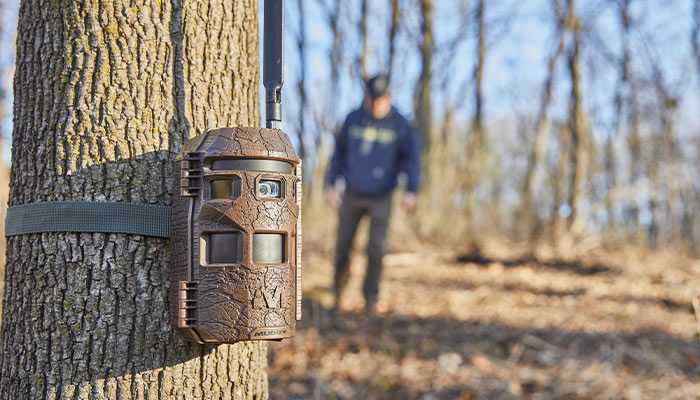
6 Trail Camera Tips for Hunting Public Land
Improve your reconnaissance strategy this deer season on land open to everyone.
By Darron McDougal
Hanging a trail camera in the deer woods is rarely ever a bad move. It almost always provides at least some data that can inform your fall hunting strategy. Not to mention, it's a fun addition to the scouting and hunting experience. But things become trickier when using trail cameras on public lands.
First and foremost, read the regulations to make sure that trail cameras are legal to use in the state and even on the individual public parcel you'll be hunting. In Kansas, for example, trail cameras are illegal to use on public lands and private lands open for public hunting, such as Walk-In Hunting Areas. As well, public parcels in many states have closures during certain times of the year, meaning entering them to hang a trail camera is illegal. Again, read the regulations.
Barring any special regulations or land closures, follow these six tips to enhance your public-land trail-camera game this deer season.
1. Avoid Human Thoroughfares
Whitetail signs such as rubs, scrapes, tracks, and droppings can be prolific along walking trails and logging roads. However, hanging a trail camera where other folks hunters and recreational enthusiasts alike frequent can hurt your strategy in two ways. First, the more people who pass by your trail camera, the more likely it is to be stolen. Secondly, most, if not all, of the deer data you capture will be less than applicable to your hunt because it will be primarily in the dark hours when human activities subside. So, set your cameras over deer sign in locations that don't overlap areas subject to high human traffic.
2. Hide that Camera
Even when you set your trail camera off the beaten path on public land, chances are that another hunter will eventually walk near it. While most hunters are respectful of others, there are occasional bad eggs. I've had two incidents in which others tampered with my trail cameras on public land. One camera vandal removed my camera from the tree and then re-attached it upside down. The other camera was outright stolen, and it was a wireless camera. For that reason, hang your trail cameras either 8-10 feet aboveground and aimed downward at a scrape or deer trail, or hang them on trees that are the same color tone as the cameras. Many of the newest models of Stealth Cams come equipped with internal GPS, so you can keep tabs on your camera's location and potentially bust a thief if it gets stolen.
3. Cut Intrusion via Wireless and Solar
Public land has enough human pressure without adding senseless trips in and out to swap SD cards or change camera settings. Choosing a wireless camera, such as Muddy's Trifecta 180 or Stealth Cam's Deceptor Max 3.0, delivers the data directly to the Command Pro app, eliminating card pulls. You can also change the camera settings in the respective app.
While Muddy and Stealth Cam trail cameras provide excellent battery life, replacing batteries is another eventual reality, so rigging your camera with a solar panel, such as Stealth Cam's Sol-Pak (confirm compatibility with your camera of choice), can further reduce needless pressure to the property.
4. Seek Out Hidden Food Sources
On public lands, I've commonly encountered trail cameras hung by other hunters on obvious scrapes and certainly along the edges of food plots planted by the state or federal agency that manages the property in question. Rarely do I find cameras under stands of acorn-producing oaks or near soft-mast trees. These food sources aren't always obvious, and that not only makes them great places to hang cameras, but also killer hunting spots.
5. Find Terrain Funnels
In the big woods, it can be difficult to photograph and pattern bucks. But, they do tend to utilize terrain features to travel. Study HuntStand's various base maps, overlays and 3D mapping to analyze the terrain for saddles, hourglass or wineglass funnels along creeks or connecting timber blocks, and benches below ridge tops. Bucks naturally travel through these during the rut and even during the early season. Spice up your trail camera setup with a mock scrape in one of these spots to attract every buck passing through right in front of your Muddy or Stealth Cam trail camera.
6. Start Early
Finally, the greatest influx of human pressure on public lands is typically during the weeks preceding the rut and throughout the rut. Think early October and on. Where legal, get a leg up on the competition by deploying your trail cameras early. Not only are bucks very photo-friendly when they're in velvet and before the pressure hits, but you'll get an inventory of the bucks in the area. You might even recognize a pattern and be able to pattern and kill a monster buck well before the masses hit the woods.
Follow these six pointers, and you'll likely have better results from your public-land trail camera strategy this deer season.