What Is Dead-sticking?
What exactly is dead-sticking and how you can employ this technique next time you're on the ice.
Terry Tuma June 09, 2023



BIG SAVINGS
+EVERYTHING SHIPS FREE
Learn More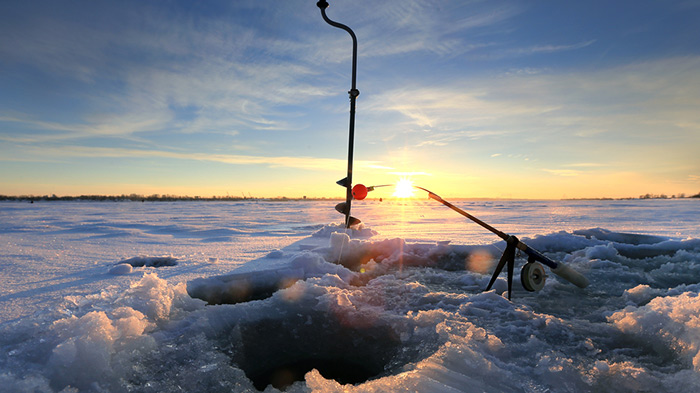
Here's a common question focusing on an all too-unheralded fishing technique: What is dead-sticking?
This tactic is simply using a stationary rod and observing line movement via a spring bobber or the small bobber itself. Dead-sticking works well when trying to find a pattern for catching fish, and it will work for all species.
Even when stationary, it's impossible for a person to hold a rod completely still, so when dead-sticking, place the rod in a rod holder.
Many varieties of rod holders exist either for an ice bucket or stand-alone. To detect even the slightest movement, you want a medium-light to ultralight rod tip. Leave the bail open and pull about 12 inches of line off your rod tip and lay it in the hole. The slack will ensure that when a fish inhales your bait, it won't feel tension and blow it out.
Generally when dead-sticking, I use an ice lure that corresponds with this subtle approach. Use a colored hook, a bead, a small jig, or an ice lure. Here again, with the dead-stick technique, we need very healthy and typically very small live bait. I'll often use one silver wiggler. If my dead-sticking produces a lot of fish, I may consider switching my approach to something more aggressive such as vertical jigging.
Again, the beauty of dead-sticking is in helping us to establish a pattern. Once we accomplish that, be willing to try a new approach.
For a great lineup of Ice Fishing Gear, shop Sportsman's Guide