Trusting Tip-Ups
The how-tos, and benefits of using a tip-up for ice fishing.
June 13, 2023



BIG SAVINGS
+EVERYTHING SHIPS FREE
Learn More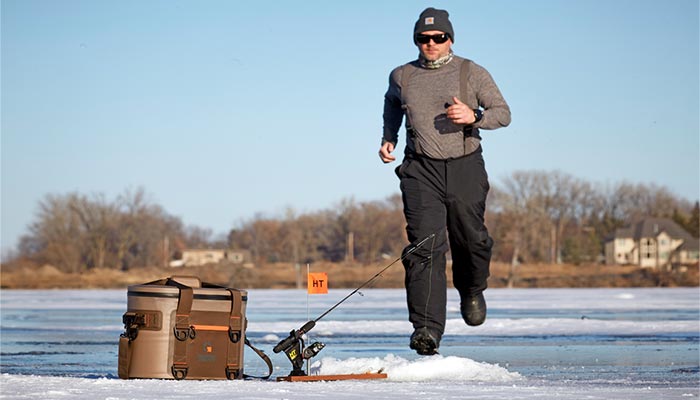
In ice fishing, a lot of the spotlight has recently focused on run-and-gun tactics with jigging rods. Yet, in the shadow of this approach lurks a tried-and-true technique that fools hundreds of fish each season -- using tip-ups.
Tip-ups are sometimes perceived as a secondary, or lesser, method for ice fishing. However, when properly used, this presentation can be extremely successful, sometimes out-fishing jigging rods.
Types of Tip-Ups
Modern tip-ups are self-supported fishing systems designed to suspend bait below the ice and instantly alert anglers to a strike. While many still use the classic flag signal, today's models incorporate refined mechanics, high-tech sensors, and even smartphone connectivity. Tip-ups are now constructed from lightweight composites, high-impact plastics, and corrosion-resistant metals, providing durability, smooth operation, and freeze protection. The primary distinction remains whether the mechanism sits above or below the ice, though rod-and-reel combos offer a hybrid approach.
Below-Ice (Submersible) Tip-Ups
Submersible tip-ups place the spool and trip mechanism fully underwater, protecting sensitive parts from wind, snow, and extreme cold. Modern designs feature sealed or low-temperature-lubed bearings for smooth spinning and consistent drag, even in frigid conditions. Premium models may include insulated bases or full hole covers to prevent refreezing and reduce light penetration, keeping fish more comfortable and bites more consistent. These tip-ups are extremely freeze-resistant and ideal for long sits or harsh environments.
Above-Ice (Traditional & Hybrid) Tip-Ups
Above-ice tip-ups maintain the classic spool-and-flag design but have evolved with composite frames, freeze-resistant components, adjustable trip tensions, and tangle-free spools. Many now include LED strike indicators or Bluetooth sensors that alert your phone when a fish bites. Wind-jigging models use improved rudders and balanced arms to impart natural bait motion in light winds, making them perfect for active fish. While these tip-ups remain exposed to the elements, modern materials and insulated shafts reduce freezing issues.
Rod-and-Reel Tip-Ups
The newest category of tip-ups integrates a short rod and reel directly into the tip-up setup, combining the strike-alert feature of traditional tip-ups with the control and sensitivity of a rod. When a fish bites, the angler can actively fight the fish using the reel, rather than relying solely on the flag. These hybrids often feature compact rods, corrosion-resistant reels, and adjustable drag systems optimized for ice-fishing conditions. Rod-and-reel tip-ups are particularly effective for larger or more aggressive species, offering both hands-on action and the convenience of a set-it-and-forget-it setup.
Rig spools with 20-pound to 40-pound-test black, braided nylon or Dacron line. These lines function well in the cold and are visible on snow and ice. Coated lines absorb less water, lasting longer than non-coated versions. They are also easy to handle when playing a fish. Don't use superbraids. Their thin diameter can cause cuts when hand-fighting fish.
Some anglers tie terminal tackle directly to the main line, but low-temperature monofilament or fluorocarbon leaders work better for line-shy fish. Connect leaders using a blood knot or a ball bearing swivel. And use a steel leader when fishing for toothy pike.
Sharp hooks are crucial for effective hook sets. Some anglers prefer treble hooks to single versions when using minnows for better hook-ups. When targeting large fish, such as lake trout or northern pike, a quick strike rig will ensure a high hooking percentage, and reduce gut hooking.
A jig head will minimize the baitfish's movement, making it easier for lethargic predators to bite. Colored hooks, jigs, or glow beads can attract fish. For weight, split shot and rubber-core sinkers perform well on various line types.
Not being confined by a boat and able to fish multiple lines (as regulations dictate), wise anglers use tip-ups to explore their fishing areas. When fishing with others, plan how you'll fish the structure. Drill the holes all at once and follow a pattern. A triangle works well for a bay, a grid suits a flat, and a V-shape is excellent for points.
Set tip-ups as your strategy dictates. You may want them on the periphery of the structure, or in shallow water. Once tip-ups are in place, jig open holes to explore the area. After hooking a fish, lines can be set to copy the successful presentation.
Tip-ups can also be used to target alternative species. For example, when jigging areas for panfish and perch, it's likely walleye or pike may be nearby. Rigging a tip-up with a large minnow on a feeding route may produce larger gamefish.
I particularly enjoy the hand-fighting fish part of the tip-up experience. Without a rod to absorb the fight, you feel each run and headshake. Use a hand-over-hand retrieve to bring in fish. Open water techniques apply for letting fish run, including not rushing in a green fish. When retrieving a lot of line, it's helpful if a partner coils it away from the hole.
Using tip-ups is a relatively slow approach to fishing when compared to aggressive running-and-gunning, but tip-ups have their application. If you have an old homemade tip-up, consider upgrading to a high-end unit for better reliability and performance.
Finally, when using tip-ups this season, make sure you tie-up your boots; you'll need them to fit snug when dashing across snow and ice to a tripped flag!
Trust us for all your Ice Fishing Gear, including Rods, Reels, & Combos, Ice Fishing Shelters, Augers, and more.