Insulate Your Tent Floor for a Warm Winter Sleep
How to insulate the floor of your tent to maximize warmth.
Tom Watson July 25, 2023



BIG SAVINGS
+EVERYTHING SHIPS FREE
Learn More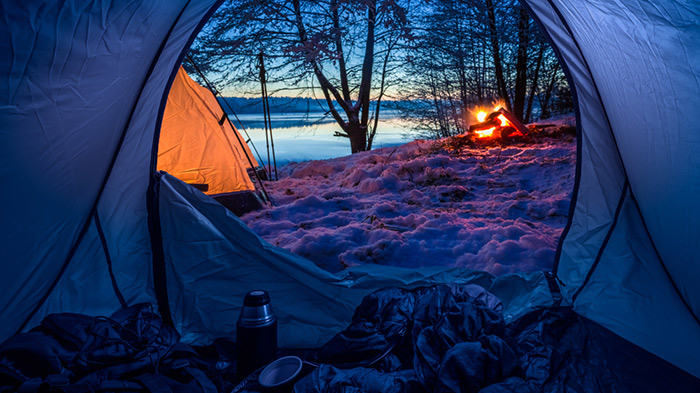
My warmest and most comfortable nights of sleep during a North Dakota winter camp out was while nestled inside a tent pitched in two feet of snow cover. A featherbed at a cozy chalet in the Swiss Alps could not have served me any better.
Pitching a tent on snow-covered ground means you'll either remove snow cover down to the frozen ground or will remove some snow from deeper cover, compacting it and forming a pad upon which you can set your tent. You're going to still want to use an insulated ground pad to keep you warm, but the compacted snow might provide a little more protection from the cold due to the air spaces trapped with that snow layer.
To assure you of an even warmer and definitely cozier night, cover the entire area upon which the tent will sit with a thick pile of leaves spread out evenly across the depression in the snow. Yes, that could be a challenge as you'd have to dig through snow to find leaves - most of which will be cold and wet. So I'm suggesting a second plan.
On the Dakota trip, I brought a small hay bale along expressly for the purpose of creating a thick featherbed cushion - a mound of deep, soft, hay. The floor of the tent swelled like risen bread dough into a soft dome as it settled down over that pile of hay beneath it. This is the same principle used in emergency situations where you collect soft pine boughs or grasses to create the foundation for a survival bed. The hay bale relies on the same processes - but without the urgency.
Coupled with prepping the floor area, the snow removed when shoveling out the tent pit can be piled along the sides of the tent creating a wind-breaker at ground level and offering slightly more insulation along the floor and lower walls. It's critical to make sure your tent sides and lines are strong and secure and that your walls are tight to keep the snow from causing excess stress on the sides of the tent.
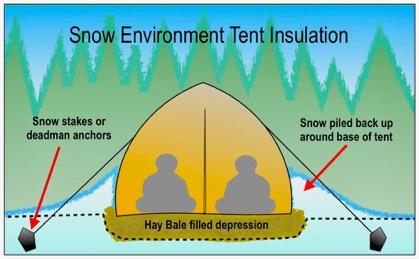
In a snow-free winter landscape, besides using leaves and grasses for beneath the tent floor. More grasses and heavier boughs can be secured around the outer perimeter of the tent - just as you'd do when piling snow - to help block cold side winds.
All of this preparation is only as good as the quality of the sleeping bag you are using. Even a 3-season bag with a liner, when used on such a warmer floor and wind-protected sides, will usually provide you with a great night's sleep - even in the dead of winter.
Find all your Camping Essentials at Sportsman's Guide