Ice Fishing: Crappie Tactics
Crappie can test the limits of any angler's patience. We break down some ice-fishing tips and tricks for hauling in more slabs.
Tim Allard June 12, 2023



BIG SAVINGS
+EVERYTHING SHIPS FREE
Learn More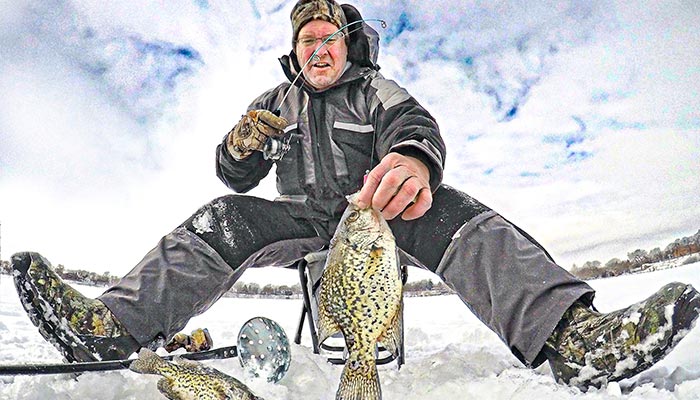
Fishing success relies on many factors, regardless of the species you're after. Yet, when it comes to catching crappies through the ice, this particular species has a tendency to sometimes test an angler's patience to the limits. If you're finding yourself stumped by paper-mouths these tips are sure to improve your catch rates.
A lot of crappie fishing can be spent in search mode, so put yourself in the right frame of mind. Don't expect to find willing biters beneath the first hole you drill. If you systematically stalk these fish though, you'll eventually find them and the reward of landing that first slab after a lot of legwork will be worth the effort.
Teamwork will also catch you more crappies. Working as a group helps you locate the best spots faster than doing it solo, especially when tackling large expanses of water. Take time to scout areas and review maps to develop a strategy with buddies. Once on the ice, spread out and drill lots of holes to cover ground. Stay in contact with 2-way radios or meet occasionally throughout the day.
The following spots serve as good starting points for your crappie search. In small, fertile lakes you can expect to find fish relating to deep holes or the main basin. They may also hold near healthy weeds until the vegetation dies off. In large lakes, crappies often occupy mid-depth flats or deep basin areas, but will relate closely to structures, such as points, islands, humps, or at the base of drop-offs. In rivers, crappies will avoid current and reside in backwater areas, such as sloughs, protected shorelines, side channels, or canals.
Crappies are renowned suspenders. Astute anglers fish the entire water column and catch more fish for their efforts. Slowly swimming lures down not only helps intercept suspending fish, but the presentation's more natural than dive-bombing baits. Don't discount fishing right beneath the ice in shallow areas either. Last year I iced several crappies at dusk jigging less than a foot below my ice hole. The fish would streak in from the sides and smack the ice jig, making for productive and adrenaline-filled fishing.
One of my fondest hard-water memories is an evening of incredible first-ice crappie fishing with a teenage friend. The only sounds filling the crisp, winter air were the hiss of a glowing gas lantern, our laughter, and the occasional "zip" of a reel drag. A sure-fire way to improve your winter crappie catches is fishing at night. Paper-mouths become more aggressive at twilight, pushing onto structures, such as humps or points, or invading shallow areas and weedlines in search of food. Like walleye fishing, it's best to arrive early and set up in advance so you're ready when the feeding frenzy starts. Also, for around $20 you can get a compact headlamp that provides excellent hand-free illumination.
Without a doubt using a portable sonar when targeting crappie will catch you more fish given their suspending tendencies. Monitoring the display also offers clues on the activity level of fish based on how they relate to your bait. Tweak your presentation accordingly until you crack the code to trigger bites.
It's also important that you learn how to fine tune your electronics. Crappies are notorious suspenders. Faint, weak, flickering sonar signals might seem like interference to novices, but to veteran users these subtleties are clues that fish may be on the edges of their sonar's cone signal. They'll adjust their strategies accordingly and catch more crappies for it.
Work as a team, fish the entire water column, and be thorough and use your sonar to its fullest potential and you'll see your slab-catching success skyrocket.
Trust us for all your Ice Fishing Gear, including Rods, Reels, & Combos, Ice Fishing Shelters, Augers, and more.