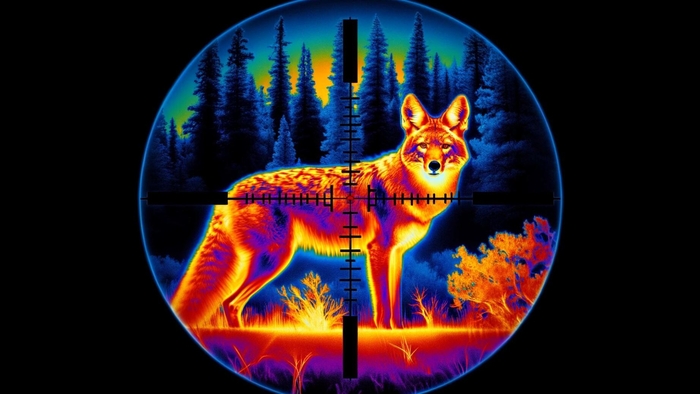
How Thermal Imaging Works for Hunters and Shooters

Learn how thermal imaging can take your next hunt to the next level.

May 03, 2024

 
5 out of 5 star rating 1 Reviews
How Thermal Imaging Works for Hunters and Shooters

All objects, both natural and manmade, emit infrared energy as heat. By detecting very subtle temperature differences of everything in view, infrared (or thermal imaging) technology reveals what otherwise would be invisible to the naked eye. Even in complete darkness and challenging weather conditions, thermal imaging gives users the ability to see the unseen. First developed for military purposes, thermal imaging has since been adopted by law enforcement, fire and rescue teams, and security professionals. Now, hunters and shooters can easily get their hands on this technology.


Thermal imaging technology has revolutionized hunting and shooting by providing unparalleled visibility in conditions that traditionally challenged even the most skilled hunters. Utilizing the heat signatures emitted by all animals, thermal imaging devices enable hunters to see their environment and targets in complete darkness, through dense foliage, and in various weather conditions. This article explores how thermal imaging works and its profound impact on hunting and shooting practices.
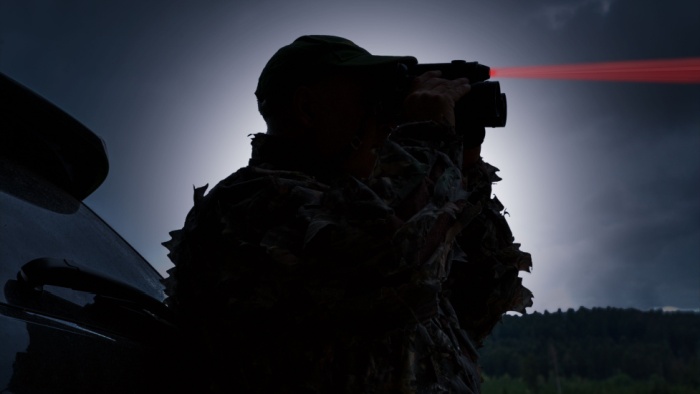
Hunting in the dark with thermal imaging

Understanding Thermal Imaging

Thermal imaging operates on the principle that all objects, regardless of lighting conditions, emit infrared radiation or heat. This technology captures this radiation and translates it into an image visible to the human eye. At the core of a thermal imaging device is a component known as a microbolometer, which detects infrared radiation and produces a detailed thermal map of the scene.


Key Components of Thermal Imaging Devices

A thermal imaging scope is a sophisticated device that uses several key components to detect heat and render images based on temperature differences in the environment. Each component plays a critical role in the functionality of the scope. Here's a more detailed look at these components:
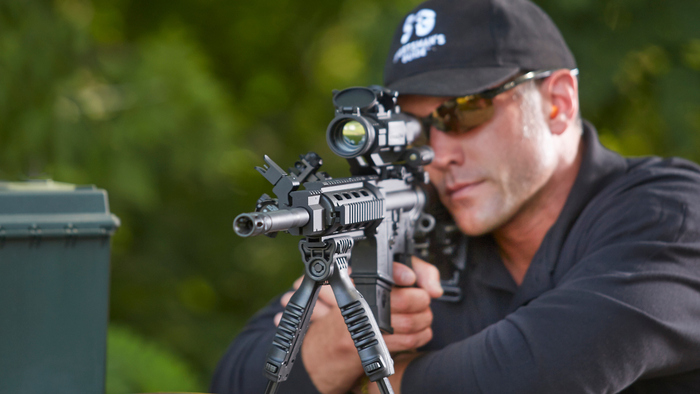

  • Infrared Sensor Array: At the heart of every thermal imaging scope is the infrared sensor array, commonly known as a microbolometer. This component detects infrared radiation or heat emitted by objects. Unlike traditional cameras, which capture the light reflected by objects, microbolometers measure the heat that objects emit.


  • Signal Processor: The raw data from the sensor array is processed into an image. Advanced algorithms enhance the image quality, making it easier for users to identify objects and animals.


  • Display: The processed image is rendered on a digital display within the thermal imaging device, typically using varying colors to represent different temperatures. Warmer objects appear brighter or in different colors, depending on the color palette selected.


Thermal Imaging Hunting Devices

thermal scope for gun

Thermal Scopes

Thermal scopes are perhaps the most direct application of thermal imaging technology for hunting. They are mounted directly onto rifles or other firearms and provide a direct aim point for shooting.
  • Use: Primarily used for night hunting, allowing hunters to clearly see the heat signatures of animals even in complete darkness.
  • Features: They often include various reticles, and magnification levels, and can store multiple zeroing profiles for use with different firearms
Thermal Monoculars for hunting

Thermal Monoculars

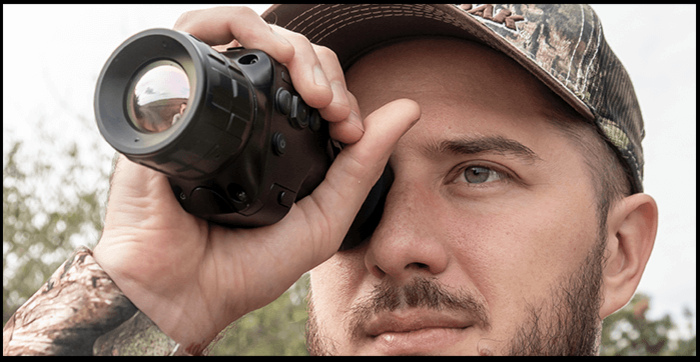
Thermal monoculars are handheld devices that allow hunters to scan and observe their surroundings without the need to be attached to a firearm. They are compact, lightweight, and easy to carry, making them an essential tool for spotting game before deciding to take a shot.
  • Use: Ideal for scouting, tracking, and recovery efforts, as they can quickly and easily detect heat signatures at various distances.
  • Features: Many models offer recording capabilities, allowing hunters to capture images or videos of their observations.
thermal binoculars for hunting

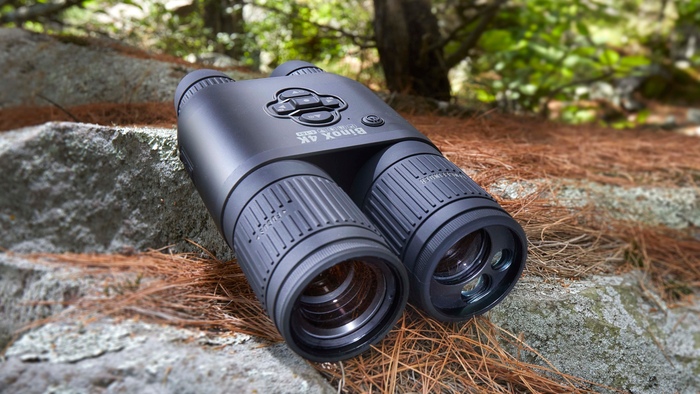
Thermal Binoculars

Thermal binoculars provide a dual-eyepiece configuration, which some users find more comfortable for extended viewing periods compared to monoculars. They typically offer more advanced optics and a wider field of view.
  • Use: Suited for long-term observation where depth perception and comfort are important, such as during extended tracking or when conducting surveillance over a large area.
  • Features: These often come with higher resolution displays and more sophisticated image processing capabilities for clearer images.
thermal clip on for hunting

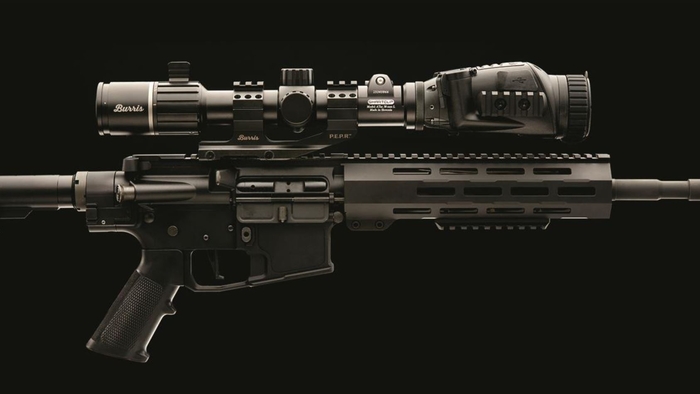
Thermal Clip On

Thermal clip-on systems are versatile devices that can be attached in front of a traditional daytime scope, converting it into a thermal imaging scope without the need for re-zeroing.

  • Use: Allows hunters to maintain the use of their favorite daytime scopes at night, providing flexibility and ease of transition between night and day hunting without requiring multiple scopes.
  • Features: Clip-on systems are designed to be easy to attach and detach, often without tools, and they maintain the optical traits of the original scope such as magnification.

Advantages of Thermal Imaging in Hunting and Shooting

Why would a hunter or shooter want a thermal imaging device? There are a couple of main reasons;


  • Visibility in Complete Darkness: Since thermal imaging does not rely on visible light, hunters can easily detect and track game during the night or in other low-light conditions.


  • Detection Through Obstacles: Thermal imaging can penetrate smoke, fog, and foliage to a certain extent, revealing the heat signatures of hidden or camouflaged game.


  • Enhanced Detection of Living Targets: Animals and humans emit more heat than their surroundings, making them stand out clearly in a thermal image. This feature is particularly useful for hunters tracking warm-blooded animals in cold environments.


  • Improved Safety and Ethical Hunting: Hunters can more accurately identify and confirm their targets before taking a shot, reducing the risk of misidentification and promoting ethical hunting practices.


  • Use in Adverse Weather: Unlike other optical devices, thermal imagers are less affected by weather conditions such as rain or fog, maintaining functionality when other devices might fail.


Applications in Hunting and Shooting

While thermal imaging has many applications, there are three main reasons for hunters and shooters to use it.


  • Scouting and Tracking: Hunters can scout large areas without disturbing the wildlife, identifying hot spots where animals frequent.


  • Night Hunting: Laws permitting, thermal imaging allows hunters to pursue nocturnal species or manage predator populations more effectively.


  • Search and Rescue: In shooting accidents or lost hunter scenarios, thermal imaging can quickly locate a heat signature, facilitating rapid response.


Thermal vs Night Vision

Many night hunters ask, "Should I get thermal or night vision?" Here are some things to consider when deciding which is best for you.


1. Operational Principle

  • Night Vision: Night vision amplifies available light (including near-infrared light) to create a visible image. It works by capturing ambient light or infrared light, which is then amplified by a photomultiplier (a photoelectric tube) to produce a detailed image of the scene.
  • Thermal Imaging: Thermal imaging doesn't rely on visible light; instead, it detects infrared radiation (heat) emitted by objects. All objects emit some form of infrared radiation based on their temperatures. Thermal cameras convert this radiation into a visible image, displaying warmer objects in stark contrast to cooler backgrounds.


2. Performance in Different Conditions

  • Night Vision: Requires some ambient light (moonlight, starlight, or infrared illumination) to function. In completely dark environments without any light source, traditional night vision devices will not work effectively.
  • Thermal Imaging: Works in complete darkness, as it does not depend on light but on heat. It can also see through smoke, fog, and some materials that can obscure standard and night vision optics.


3. Image Quality and Interpretation

  • Night Vision: Produces an image that can closely resemble a monochrome version of a scene as it would appear to the human eye under natural light. Objects are represented based on their light reflection and can be easier for most people to interpret.
  • Thermal Imaging: Displays images based on the heat signatures of objects. Different temperatures are represented by different colors or shades of gray. This can sometimes make interpretation more challenging, especially for identifying specific details that do not relate to heat.


4. Detection vs. Recognition

  • Night Vision: Excellent for detailed recognition of subjects in low-light conditions. It is particularly effective for navigation and surveillance where the identification of specific features or individuals is crucial.
  • Thermal Imaging: Superior for detecting living beings or mechanical devices that emit heat in adverse visibility conditions. However, thermal images can sometimes lack the detail required for positive identification of an individual or object unless coupled with high-resolution sensors.


5. Stealth and Tactical Use

  • Night Vision: While highly effective, some night vision devices can be detected if they use infrared illuminators, as these emit light that can be seen by other night vision equipment.
  • Thermal Imaging: Offers greater stealth as it emits no light and simply detects existing infrared radiation. This makes it particularly valuable for military and tactical scenarios.


6. Cost and Availability

  • Night Vision: Generally less expensive than thermal imaging systems and more widely available in various consumer-grade forms.
  • Thermal Imaging: Typically more expensive due to the complexity of the technology and the materials required for detecting infrared radiation. However, as technology advances, it's becoming more accessible.


Conclusion

The decision to use a thermal scope can provide a transformative advantage in many scenarios where traditional viewing methods fall short. Whether for practical, recreational, or professional purposes, thermal imaging's unique properties make it a valuable tool in anyone's arsenal, providing capabilities that extend beyond the limitations of human vision and conventional optical technology.

Find all the best Thermal Imaging Optics at Sportsman's Guide

How helpful was this article?
         
Modal Trigger Modal Trigger Modal Trigger Modal Trigger
Modal Trigger Modal Trigger Modal Trigger
Modal Trigger