German Flecktarn Camo: A Difference of Dithering
The pros and cons of Flectarn camo.
Isaac Romsdahl April 05, 2023



BIG SAVINGS
+EVERYTHING SHIPS FREE
Learn More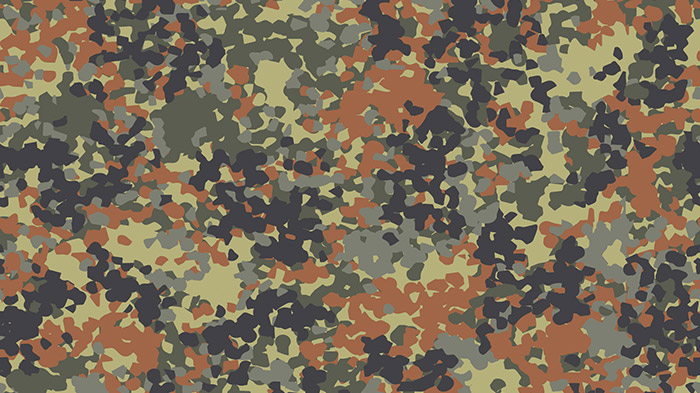
Flecktarn is a bold, cutting-edge camo seen across German military surplus as well as many other European countries. The name Flecktarn is a combination of 2 German words: fleck (mottled) and Tarnung (camouflage). But where did it come from?
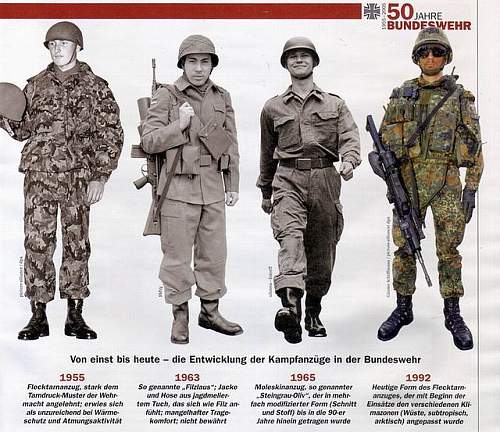
In 1976, the Western German Army held trials to develop a new, more modern camo scheme to replace what was then a plain gray moleskin field uniform. Test patterns used many different elements from nature: shaped dots, ragged-edged leaves, thin pine needles and more.

But when the trials were concluded, the final chosen pattern had no identifiable natural elements. Instead, the pattern uses 5 colors printed in a seemly random arrangement: 13% Black, 41% Dark Green, 18% Brown, 9% Light Green and 19% Gray Green. But there is a rule to this randomness. The arrangement of Flecktarn uses a technique called dithering to replace hard natural edges with a soft, hard-to-detect transition from one color to another.

In the same way, Flecktarn breaks up human-shaped fields into a blended background with no definitive shape or color. The same process is behind the modern digital camo in use by many armed forces, including the United States.

But Flecktarn sets itself apart by replacing the pixelated squares with rounded dots. Which is better, squares or dots? The German military command has decided in favor of the dots, since by the late 1990's variations of Flecktarn camo were officially adopted by all German armed forces. You can also see modified Flecktarn in use by Belgian, Indian, Japanese, Polish forces and more.

Today Flecktarn is one of the hottest camo patterns in fashion, while still staying right to the top for reliable concealment during temperate-climate hunting and other civilian activities.
Visit Sportsman's Guide for a great selection of Flecktarn Camouflage.