Florida: Lake Monroe Offers Excellent Crappie Action
A hidden gem for crappie fishing: Lake Monroe in Seminole & Volusia Counties, Florida.
John N. Felsher May 12, 2023



BIG SAVINGS
+EVERYTHING SHIPS FREE
Learn More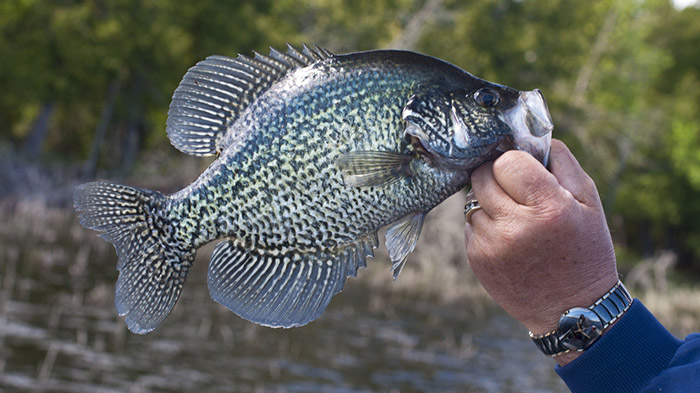
Although mostly known for numbers, Lake Monroe, covering 9,406 acres in Seminole and Volusia counties near Sanford, Fla., can produce crappies exceeding 3 pounds!
Lake Monroe is an extraordinary crappie lake, said George Parker, a professional angler from West Palm Beach, Fla. It has a lot of fish and a ton of big fish in it. It has plenty of crappie in the 2- to 2.5-pound range. My biggest ever on this lake was a 2.60-pounder, but I guarantee this lake has some 3-pound fish.
Fed by the St. Johns River running through it, Lake Monroe averages about 6- to 8 feet deep. Much of the bottom remains flat and featureless except for a few humps, but some holes in the river channel drop to nearly 20 feet deep. During cold weather, many people fish the channel drops or ledges. Several grass beds create additional cover. If anglers can find grass near a hump or hole, they can usually catch fish.
Troll Channel Edges
Many anglers troll Roadrunners or minnow-tipped jigs along the channel edges. Trolling allows people to cover considerable water in a short time. Once anglers find fish or determine patterns, they can frequently fill a livewell in a short time.
Finding one fish is the tough part, said Don Collins, a professional crappie angler from Largo, Fla. I look for rises or channels, anything different on the lake bottom contour. A river channel coming into a lake is just like a highway to fish. They follow it. Once we mark good fish, we go over the same area several times. If there are two big fish in one area, that means there could be more slabs in that same area. A person who knows this lake can catch a lot of fish.
Using rod holders spaced about two to three feet apart, Collins baits eight poles with different lures. He puts four rods in the bow and four hanging off the back, usually where his wife and tournament partner, Toni, fishes. They set the longest rods out to the sides near the bow in the reconfigured bass boat and put the shortest rods off the stern by Toni.
While pros rig their boats for tournament fishing, weekend anglers can also pull Roadrunners or other baits with good success. After finding honey holes with electronics, anglers in johnboats can simply hold their fishing rods as they troll or clamp some portable rod holders to their boats. In a canoe or kayak, an angler can secure one or two rods and paddle over a good spot.
The Collins' team prefers to use their electric motor to push their boat at about .7 to 1.4 miles per hour. The speed of the trolling motor determines the depth at which a lure might run. In about 8 feet of water, a Roadrunner might track about 2- to 4-feet-deep. Often, the spinner flutters just over the tops of submerged weed beds. Fish come out of the vegetation to snatch the lure.
Try Different Color Lures
Sometimes, crappie pros troll tube or feather jigs, or tip their jigs with live minnows hooked through the bottom lips, or even sweeten hooks with pieces of colorful crappie candy, a morsel of Berkley PowerBait. Often, professionals try several color combinations until they figure out the pattern that day.
We use a lot of different colors until we determine what the fish want, Collins said. If we start catching more fish on one color, we change most of the baits to that color. That allows us to continue to catch fish while still looking for other colors that the fish might like better. Fish don't necessarily stop biting. When conditions change or the sun gets higher, crappie might not be able to see some colors as well.
Some better places to troll for Lake Monroe crappies include the channel edges or where the river enters and leaves the lake at the north and south ends. Anglers can follow channel markers to find deeper water. Crappie anglers might also fish near the seawall along the Sanford riverfront or over holes near the power plants on the lake. A weedy hump in the lake center also offers a good spot for tempting crappies. Try a few places to see what happens.
Right in the middle of historic downtown Sanford, Downtown Sanford Marina provides a first-class launch facility with nearby lodging and restaurants overlooking the lake. For more information about the area, contact the Seminole County Conventions and Visitors Bureau.
Shop Sportsman's Guide for a great selection of Crappie Fishing Gear!